Trauma doesn’t live in just one place. Neither does recovery.
Pancha Kosha Trauma Framework™ is a Pancha Kosha–informed approach that conceptualises trauma and recovery as layered processes across body, energy, mind, insight, and inner well-being, enabling structured understanding and intervention.
Why one layer is never enough
Most contemporary trauma frameworks stop at one or two layers — the cognitive, sometimes the behavioural, occasionally the nervous system. But anyone who has lived with trauma knows better. Trauma does not stay neatly confined to a single part of you. It surfaces in the body that refuses to settle, in the breath that won’t fully come in, in the emotions that keep looping back, in the beliefs about yourself that feel less like beliefs and more like truths, and in the deeper question of who you even are anymore.
Indian yogic philosophy described this layered experience thousands of years ago through the Pancha Kosha — the five sheaths or layers of human existence. Contemporary neuroscience and trauma psychology are now arriving at remarkably similar territory from a very different starting point. Both Riri and Gunjan have completed yoga instructor and therapist certification and have incorporated the idea of Pancha Kosha into their daily work and training (Module 1). Over the past 5 years, Gunjan and the team have interviewed around 3000 individuals for a history of childhood trauma and about 1000 individuals for the symptoms of PTSD and CPTSD. The insights from the interview, thousands of psychometric assessments and qualitative understanding are incorporated into the framework that provides a unique understanding of the impact of repeated exposure to childhood trauma. We call it the Pancha Kosha Trauma Framework™.
What is Pancha Kosha (in brief)?
Figure 1 provides a perspective on Pancha Kosha components to understand the trauma framework. The book covers how trauma affects each layer and what is involved in the recovery process.
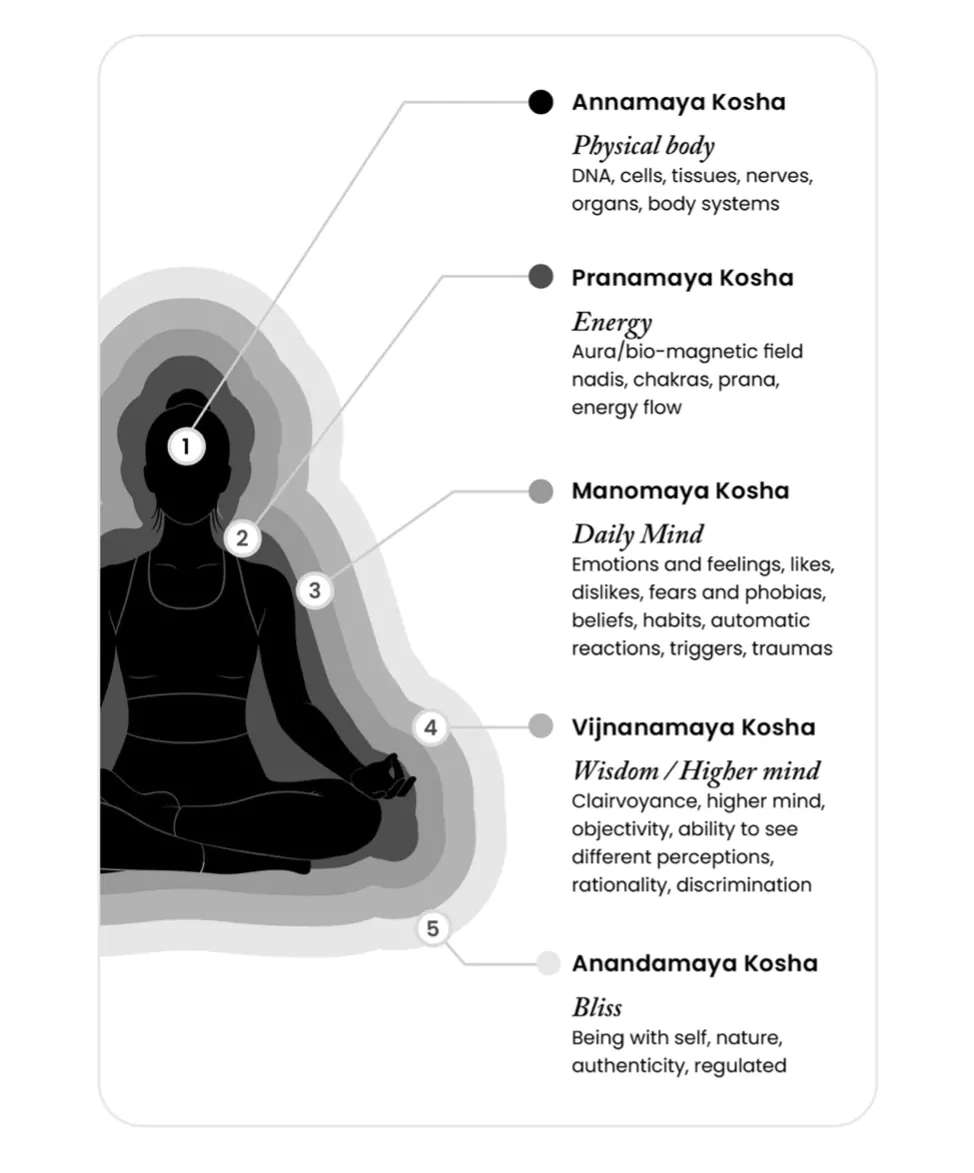 Figure 1 – Pancha Kosha framework for trauma
“Healing only the surface leaves the deeper layers intact — and the pattern eventually returns.”
Trauma can touch any of these layers — and typically touches several.
Recovery, if it is to be lasting, must move through all of them.
Why the Pancha Kosha Framework matters in trauma recovery
Developed through years of integrating Indian Knowledge Systems with psychotherapy and trauma recovery work at Wellness Space, the framework offers a culturally grounded perspective that resonates with both modern science and traditional wisdom traditions. For Indian clients especially, it can put into words something they have always intuited — that healing is more than thinking differently, and that the deeper layers of the self are real, even if Western psychology has been slow to name them.
Our uniquely designed framework (highlighted below) helps bring out the full perspective on the “What happened to me?” narrative, as compared to “What’s wrong with me?”, for you.
- PsyKundali™
- Trivedi ACE-14 Assessment™
- PsyComplexity Scale™
- Trivedi FLIP Model™
- Trivedi Depression Pathways™
What Happened to Me? — the book behind the framework
These concepts are discussed in detail in our evidence-based book, What Happened to Me? vs What’s Wrong with Me? The book also integrates modern scientific principles from (a) the nervous system, especially the autonomic nervous system, (b) memory systems, (c) the concept of memory re-consolidation, and (d) the hidden aspects involved with long-term trauma imprint, along with the Pancha Kosha framework.
Who this is for
- People with persistent physical symptoms alongside emotional distress — the body that won’t settle, no matter how much therapy is done.
- Those who feel intellectually ‘healed’ but still find old patterns running in the background. (Example: challenges with forgiveness)
- Anyone drawn to integrative approaches that hold both contemporary science and contemplative tradition seriously.
- Therapists looking to expand their formulation beyond purely cognitive or behavioural models.
- Individuals who are not finding any issues in traditional diagnosis or measurements but have a history of exposure to repeated forms of childhood trauma.
- For clients: learn how this framework is applied in inner child therapy.
Frequently asked questions
- Is this spiritual or scientific?: Both, and we don’t treat that as a contradiction. The framework uses the Pancha Kosha as a structural map and draws on contemporary neuroscience, polyvagal theory, and trauma psychology to articulate the mechanisms. Clients are free to engage with whichever language resonates — many find that the two reinforce each other.
- Do I need to be familiar with yogic philosophy?: No prior familiarity is required. The therapist will introduce the layers in plain language and link them directly to your own experience.
- Is this religious?: No. The Pancha Kosha is a philosophical and phenomenological model of human experience, not a religious doctrine. The framework is used clinically, not devotionally.
- How is this different from regular body-based therapy?: Body-based therapy typically works with one or two layers — the physical and nervous system. The Pancha Kosha framework explicitly extends through emotional, belief-level, and identity-level dimensions, giving recovery a fuller arc.