Positive Childhood Experiences May Strengthen Adult Resilience After Childhood Trauma
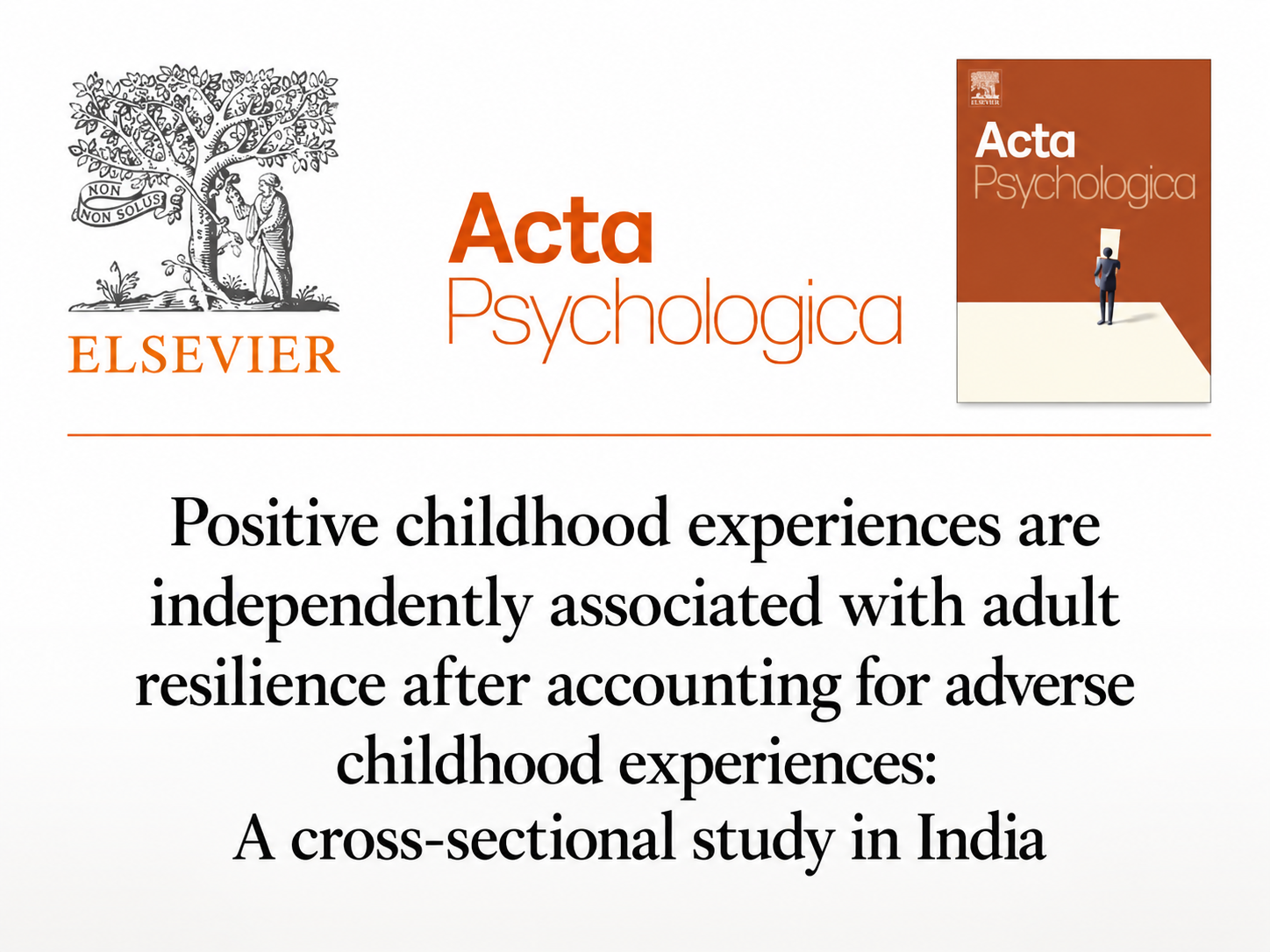
Our newly published study by Dr Gunjan Y. Trivedi (Wellness Space), published in the journal Acta Psychologica, highlights an important insight in mental health research: Positive Childhood Experiences (PCEs) may strengthen adult resilience, even among individuals exposed to Adverse Childhood Experiences (ACEs).
The study examined how both positive and adverse childhood experiences (for more details, click on childhood trauma research in India) are associated with psychological resilience among Indian adults (N = 347).
For decades, mental health research has focused primarily on childhood trauma, abuse, neglect, and other adverse childhood experiences (ACEs). While the long-term impact of ACEs is well established, emerging research is now highlighting the importance of Positive Childhood Experiences (PCEs) — experiences such as feeling emotionally supported, safe, connected, valued, and protected during childhood.
The findings showed that:
- Higher ACE exposure was associated with lower adult resilience.
- Higher PCE exposure was associated with greater resilience.
- PCEs continued to show an independent positive association with resilience, even after adjusting for adversity, age, and gender.
The study supports a compensatory model of resilience. This suggests that positive experiences may independently contribute to stronger coping abilities and emotional recovery later in life, even in the presence of adversity.
The research has important implications for India and other Global South countries, where mental health challenges are rising rapidly. The study highlights the importance of prevention-focused approaches — including emotionally supportive parenting, safe environments, positive school experiences, and stronger community connections — as potential public mental health strategies.
The findings are also consistent with trauma-informed and resilience-based approaches that are increasingly being discussed globally. Rather than focusing only on “what went wrong,” the research encourages society to also ask:
What positive experiences help people recover, adapt, and thrive — irrespective of the presence of adversity?
This work contributes to a growing effort to better understand the pathways between childhood experiences, resilience, emotional health, and long-term well-being through evidence-based, trauma-informed frameworks.
Full article link: https://www.sciencedirect.com/science/article/pii/S0001691826008292
In the news: Childhood Trauma Is Not Destiny: New Study Finds Positive Childhood Experiences Independently Build Adult Resilience
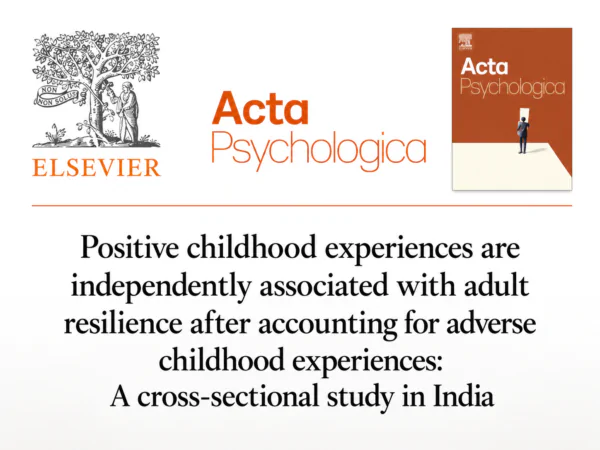
Published research in Acta Psychologica examining how positive childhood experiences may support adult resilience despite adverse childhood experiences.