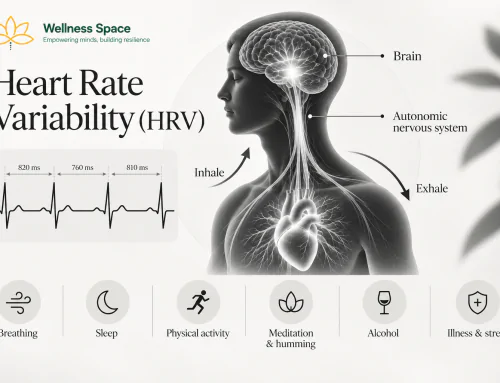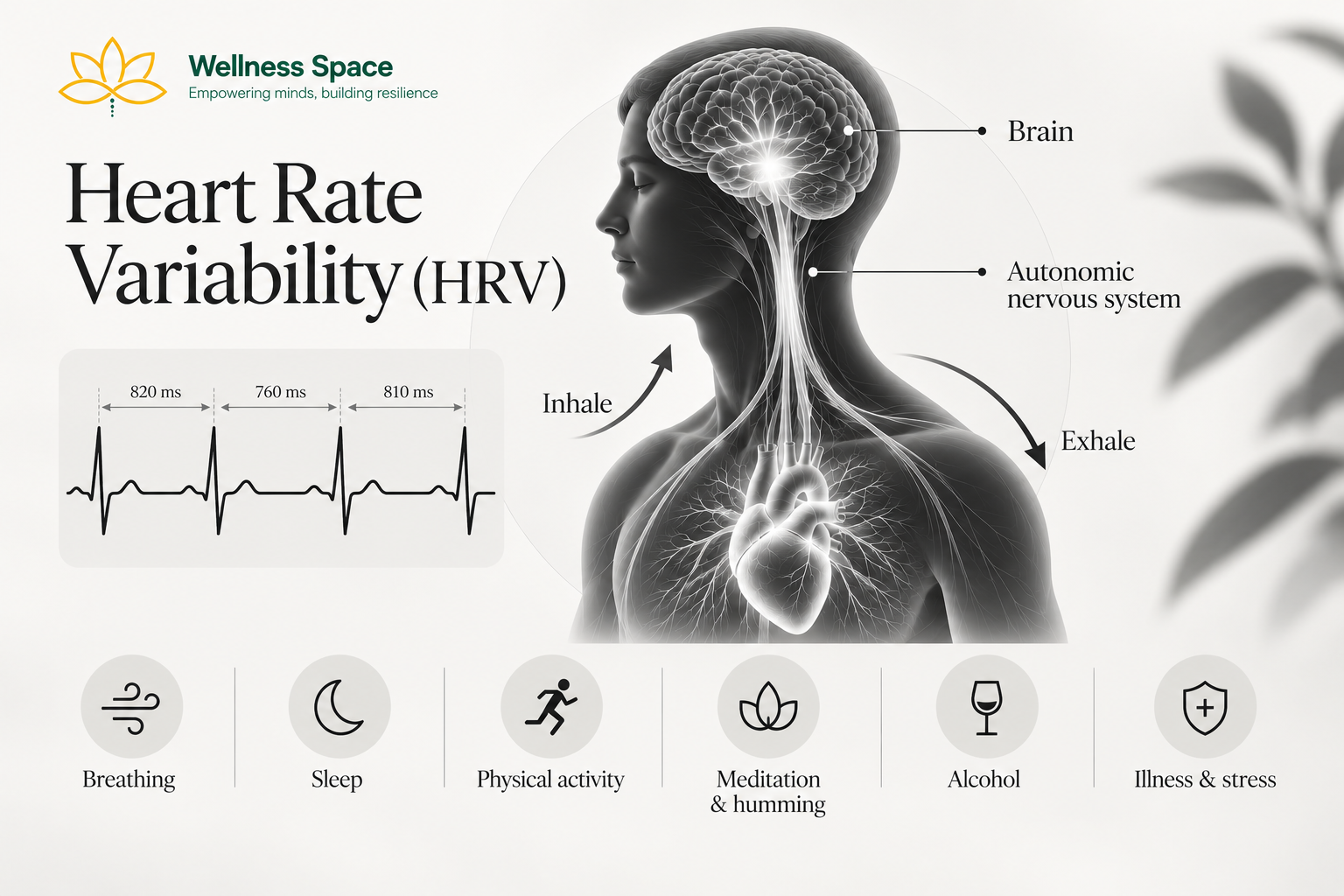
An example of how to interpret our daily routine using Heart Rate Variability (HRV) and identify areas of opportunity for enhancing overall well-being.
Before reading the data below, it helps to know what the number actually represents. Our full guide to heart rate variability, stress and the nervous system explains which HRV metrics matter, why comparing your reading to someone else’s is misleading, and what our research has found actually shifts it.
The following individual started measuring the morning (3 min) heart rate variability (using a Polar H-10 device and the EliteHRV app) to understand how stress and recovery can be managed for overall well-being. The data clearly shows poor stress management (low HRV, higher heart rate, and so on). The X-axis identifies what caused the increase or decrease in HRV. Based on this data, the conclusions were made and the intervention was identified to address the problems.
 Implications:
The person concluded the following:
- Heart rate has the potential to improve (by adding recovery and exercise, in that order)
- Once the intervention (recovery first and exercise later) starts showing results, the exercise intensity can be increased. Reversing the order of intervention in this case (exercise first and recovery later) is likely to harm overall emotional health and is therefore not recommended.
- Specific insights: Meditation (and recovery) on day 3 increased HRV on day 4! Need to validate this by adding similar recovery.
- The balance in daily life is missing (evidence: 3 consecutive days of reduced HRV i.e. Day 1, 2 and 3 and again a decrease from Day 4 to 5 and negligible increase on Day 7). There has to be a consistent uptrend (and a consistent downtrend must be avoided since it limits our ability to manage stress and maintain balanced emotions !)
- A single day’s reading tells you very little on its own. Why is HRV read as a trend rather than a daily score?
Please contact info@wellness-space.net or call +91.95.7474.2288 if you or your organisation/family needs an intervention to manage stress, energy, and emotions.
Gunjan Trivedi, PhD
www.wellness-space.net