Heart Rate Variability: What It Actually Tells You About Stress, Recovery and the Nervous System
Your watch shows you a number each morning and calls it recovery. The number is real. Most explanations go wrong in the interpretation.
Heart rate variability (HRV) is one of the few measures that lets you see the autonomic nervous system at work in someone sitting still and feeling nothing in particular. It is also routinely oversold — as a stress score, a resilience rating, a daily verdict on how well you are living.
At Wellness Space, we have taken more than 400 HRV measurements over the past decade, in published studies on humming (simple Bhramari), the SEE Protocol for Self-hypnosis, singing bowls and meditation, and in workshops where people watch their own physiology change in real time (G. Trivedi et al., 2020, 2023; G. Y. Trivedi et al., 2023; G. Y. Trivedi & Banshi, 2019; Trivedi GY, Saboo B, Singh RB, Maheshwari A, Sharma K, Verma N, 2019). This page explains what HRV is, what it can and cannot tell you, and what our research has found shifts it.
What is Heart Rate Variability (HRV)?
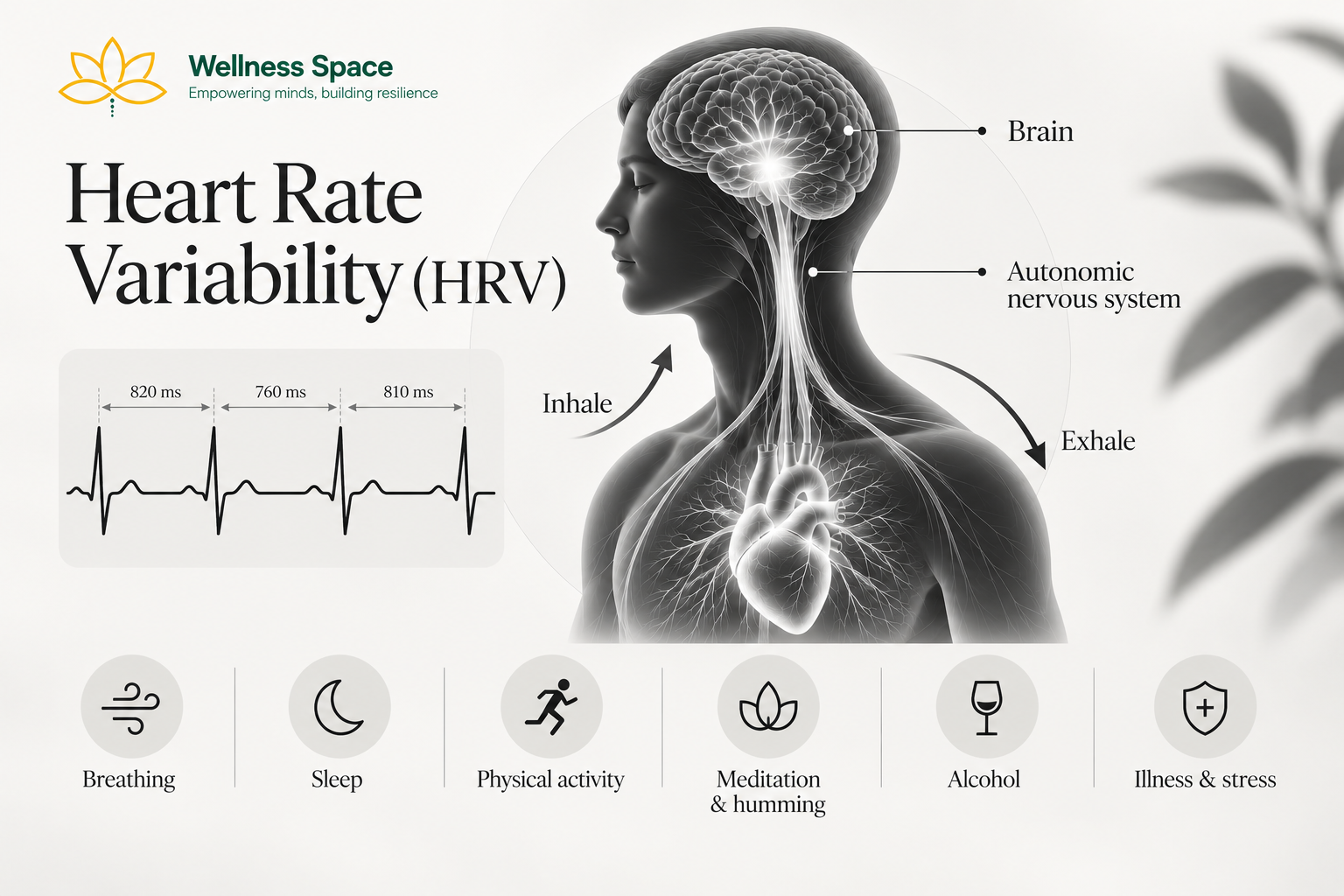
Heart rate variability (HRV) is the variation in the time interval between one heartbeat and the next. It doesn’t mean your heart is beating irregularly. A healthy heart does not beat like a metronome: the intervals between successive beats change continuously.
For example, your heart might beat at 60 beats per minute on average, while the time between individual beats varies from one beat to the next. HRV captures this beat-to-beat variation rather than simply counting how many times the heart beats in a minute.
One important reason HRV changes is breathing. During inhalation, heart rate tends to increase; during exhalation, it tends to decrease. This respiratory pattern, known as respiratory sinus arrhythmia, is one reason breathing can measurably change HRV.
This is also why breath length and rhythm can matter when measuring HRV.
HRV Is Not the Same as Heart Rate
Heart rate tells you how many times your heart beats per minute. Heart rate variability looks at the variation in the time interval between successive beats.
Two people can have the same heart rate but very different HRV. Even in one person, heart rate and HRV can change differently depending on breathing, activity, stress, sleep, and measurement conditions.
That is why you shouldn’t interpret HRV as simply a faster or slower heart rate. It is a different physiological measure that provides information about beat-to-beat variation and autonomic regulation.
HRV and stress: The mechanism
The autonomic nervous system continuously adjusts heart rate and other bodily functions in response to internal and external demands. Its sympathetic and parasympathetic branches are important parts of this regulation, but they do not operate as a simple on-off switch.
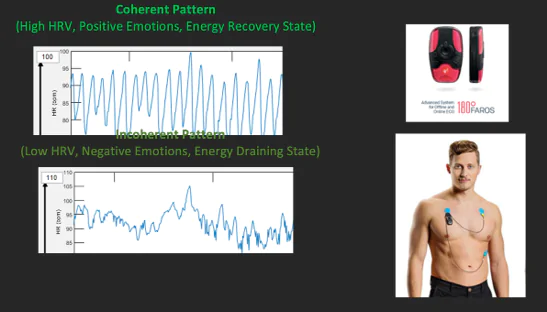
During emotional stress, physical exertion, or other demands, autonomic regulation changes and HRV often decreases. When the demand passes, HRV may increase again as the body returns towards a more recovered state.
This makes HRV an indirect window into autonomic regulation — not a stress meter. Stress is one of many factors that can influence HRV, along with sleep quality, alcohol, illness, dehydration, physical activity, time of day, body position, age, and, importantly, breathing during the measurement.
A healthy stress response is not the absence of activation. The system is meant to rise to meet demand. The more useful question is whether regulation returns afterwards, which is why a pattern observed over weeks is more informative than any single reading.
Additional perspective: Stress, human autonomic nervous system and implications
What are the common HRV metrics that we have assessed in our work
- RMSSD — root mean square of successive differences between adjacent beat intervals. It is commonly used as a short-term HRV measure and is strongly influenced by parasympathetic activity.
- SDNN — standard deviation of normal-to-normal beat intervals. Reflects overall variability from all sources, not parasympathetic activity alone.
- pNN50 — the proportion of adjacent beat intervals differing by more than 50 milliseconds. Like RMSSD, it is influenced strongly by respiratory and parasympathetic activity.
- Stress Index — a geometric measure that rises as beat intervals cluster together. Useful for comparing states within one person.
- LF/HF ratio — often described as sympathovagal balance. That interpretation is contested in the physiology literature and should not be leaned on.
Figure 1 – Dashboard (Kubios) showing key HRV parameters
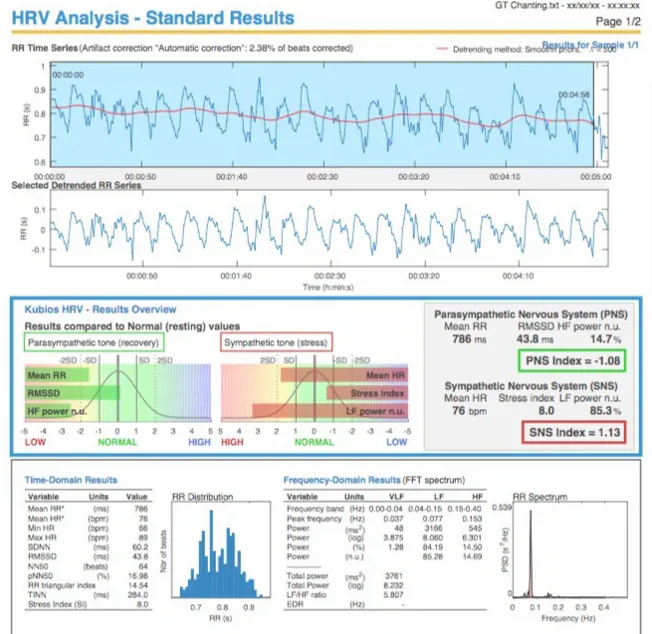
The visual (Source: Kubios) provides parameters of HRV for visual understanding. (Analysis by Dr Gunjan Y Trivedi)
What is normal HRV?
There is no single normal. Between two healthy people of the same age, RMSSD can differ several-fold with neither of them having anything wrong. HRV also declines with age, which is expected, not concerning.
Three things make cross-person comparison close to meaningless. Devices differ: an ECG chest strap and a wrist optical sensor are measuring different signals with different error. Protocols differ: an overnight average and a five-minute seated reading are not the same number. And posture, breathing and time of day move a reading substantially within the same person on the same morning.
Your HRV is comparable to your own HRV, measured the same way. Read the trend over weeks; ignore the day-to-day noise.
What low HRV reading can and can’t tell you?
A single low reading does not tell you why your HRV is lower that day. Poor sleep, alcohol, a coming infection, a hard training session, dehydration, psychological stress and changes in measurement conditions can all influence the result.
A persistently low reading over a longer period is different. Reduced HRV has been studied as a marker associated with autonomic dysfunction and with cardiometabolic conditions including type 2 diabetes. These are population-level associations, not diagnoses for an individual, and you should not use HRV alone to determine whether someone has a health condition.
HRV is not a diagnostic tool. Discuss persistent or unexplained changes in your physiological measurements with an appropriately qualified healthcare professional.
What can and can’t a high reading tell you?
Higher HRV is often associated, at the population level, with greater autonomic flexibility and better recovery. Research has also linked HRV with aspects of attention and emotional regulation.
But a higher number is not automatically a sign of better health, just as a lower number is not automatically a sign of illness. HRV varies substantially between individuals and is influenced by measurement conditions, breathing, age, fitness, sleep and many other factors.
It is therefore more useful to understand HRV as a measure to track over time than as a score to maximise.
What actually changes HRV? The evidence
The following draws on studies conducted at Wellness Space and published in peer-reviewed journals, as well as the wider literature.
1. Breathing and humming
Slow breathing is one of the most direct ways to influence HRV during a measurement. HRV biofeedback research commonly uses slow breathing at around six breaths per minute, although the breathing rate that produces the largest response can vary by individual and protocol.
Humming behaves differently. In a study of 118 participants using a randomised within-subject crossover design, we compared breath lengths of 8, 10, 12 and 14 seconds during simple Bhramari (humming). HRV was maximised at the slower breathing rates studied: SDNN was significantly higher at 12 and 14 seconds than at 8 or 10 seconds; RMSSD peaked at 12 seconds and total power at 14 seconds, while Stress Index was lowest at 12 and 14 seconds (G. Y. Trivedi et al., 2023).
Full summary of the respiration-length study, including the 8/10/12/14-second comparison across 118 participants.
A separate Holter-based study compared humming against physical activity, emotional stress and sleep in the same individuals. On SDNN, total power, LF/HF and Stress Index, humming was either significantly better than the stressors or comparable to sleep (G. Trivedi et al., 2023).
More on simple Bhramari as a lifestyle intervention.
The Bhramari protocol developed from this research is taught at Wellness Space as a self-regulation practice, not as a treatment.
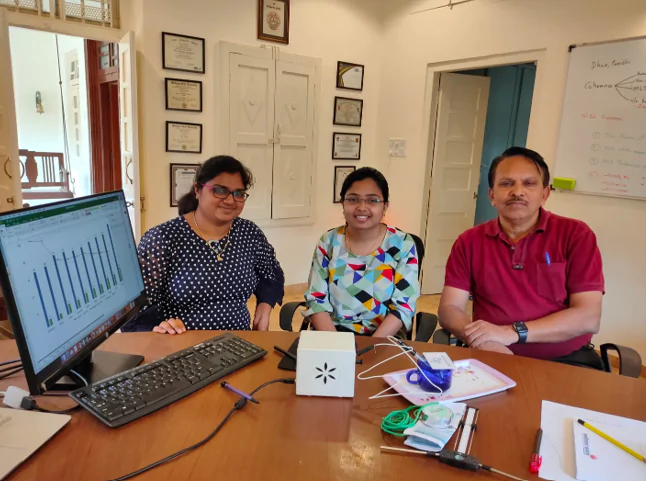
This research was conducted and published by Dr Gunjan Y. Trivedi and the team
2. Sound
In a study of a 40-minute seated Himalayan singing bowl sound bath, researchers measured mood with PANAS in 77 participants and with an abbreviated POMS in 17, alongside HRV. Heart rate and Stress Index fell, and RMSSD rose, with consistent reductions in tension, anger, fatigue and confusion (Panchal et al., 2019). See the HRV traces recorded before, during and after a singing bowl session; SDNN rises during the session and stays elevated after it ends.
An earlier comparison examined 20 minutes of singing bowls against 20 minutes of supine silence under identical conditions (G. Y. Trivedi & Banshi, 2019). The singing bowls-versus-supine-silence comparison is detailed here.
These were pre-post studies without a control group for the mood measures, and the physiological sample was small. They indicate a direction, not an effect size.
3. Active meditation and self-hypnosis
A study of women compared 20 minutes of active meditation—humming combined with coherent heart-focused breathing—against breath-focused silent meditation. Parasympathetic HRV parameters improved significantly in the active meditation group compared with the control. Negative affect fell after both practices, but positive affect increased only after the active protocol (G. Trivedi et al., 2020).
4. Sleep, movement and load
Practices such as breathing, humming and meditation are only part of the picture. Sleep, physical activity, alcohol, illness, recovery and cumulative workload can all influence HRV over time.
This is one reason HRV is more useful as a trend than as a daily score. Tracking your readings alongside sleep, activity, and your daily routine can help you understand which factors tend to coincide with changes in your own HRV.
A worked example of reading HRV against a daily routine shows what this looks like across a week, including what a three-day downtrend indicated and why recovery was sequenced before exercise.</p>
How do we measure HRV?
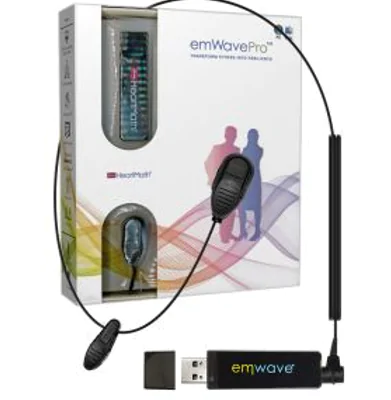
Two instruments do most of our work. An emWave sensor gives real-time feedback during a session, allowing a workshop participant to watch a breathing change register within a minute. A Holter monitor records continuously over many hours, making it possible to compare humming against sleep and physical activity in the same person across a full day.
Recordings are analysed with established HRV software (by Kubios), and the measurement protocol is held constant within each study so that comparisons are internally valid. Full detail on our measurement and analytics setup, including the emWave Pro, and eMotion Faros ECG sensor.
Learning to work with HRV
At Wellness Space, we use HRV to understand the relationship between breathing, emotional state, and autonomic regulation — not as a service to be purchased. We do not offer HRV testing as a standalone assessment.
We teach the practice side. Module 1 — The Journey Within is a 12-hour experiential workshop covering self-hypnosis through the SEE Protocol, Emotional Freedom Techniques, the SEE Life Priority Matrix, and the humming practice described above. It is open to anyone, whether or not they intend to train as a therapist.
FREQUENTLY ASKED QUESTIONS
What is a good HRV for my age?
There is no reliable target. HRV declines with age and varies several-fold between healthy people. Compare your readings only to your own, measured the same way at the same time of day, and look at the trend across weeks.
Does low HRV mean I am stressed?
Not necessarily. Poor sleep, alcohol, illness, a hard workout, dehydration and time of day all lower it. Stress is one input among many, and a single reading cannot isolate which one is responsible.
How can I improve my HRV naturally?
No single practice reliably increases everyone’s HRV in the same way. Sleep, physical activity, recovery, alcohol, illness and other lifestyle factors can influence your longer-term HRV. Slow breathing is commonly used to produce short-term changes in HRV, while Wellness Space research has found substantial within-session changes during Bhramari humming at slower breathing rates.
How long does it take to see a change?
Within-session changes can appear within minutes and may be visible on a live sensor. Changes in your longer-term baseline are slower and can be influenced by sleep, physical activity, recovery, illness, stress and cumulative workload.
Is HRV from a smartwatch accurate?
Wrist optical sensors can track trends, but their measurements are not equivalent to ECG-based RR-interval recordings and can be affected by movement, sensor fit, and other factors. Do not compare your number to someone else’s, or to a figure quoted in an article using different equipment.
Can HRV diagnose a health condition?
No. Researchers have studied reduced HRV as a marker associated with autonomic dysfunction at the population level, but it is not a diagnostic test. Discuss persistent unexplained changes with a doctor.
Reviewed by Dr Gunjan Y. Trivedi, PhD, co-founder of Wellness Space and the Society for Energy & Emotions, Ahmedabad. His doctoral research developed the Bhramari protocol to enhance heart rate variability, and he has published widely on HRV, stress measurement, and childhood trauma.
For additional insights
References
Panchal, S., Irani, F., & Trivedi, G. Y. (2019). Impact of Himalayan Singing Bowls Meditation Session on Mood and Heart Rate Variability—An Observational Study.
Trivedi, G., Patel, V., Shah, M., Dhok, M., & Bhoyania, K. (2020). Comparative study of the impact of active meditation protocol and silence meditation on heart rate variability and mood in women. International Journal of Yoga, 13(3), 255–260. https://doi.org/10.4103/ijoy.IJOY_18_20
Trivedi, G., Sharma, K., Saboo, B., Kathirvel, S., Konat, A., Zapadia, V., Prajapati, P. J., Benani, U., Patel, K., & Shah, S. (2023). Humming (Simple Bhramari Pranayama) as a Stress Buster: A Holter-Based Study to Analyze Heart Rate Variability (HRV) Parameters During Bhramari, Physical Activity, Emotional Stress, and Sleep. Cureus, 15(4), e37527. https://doi.org/10.7759/cureus.37527
Trivedi, G. Y., & Banshi, S. (2019). A Comparative Study of the Impact of Himalayan Singing Bowls and Supine Silence on Stress Index and Heart Rate Variability. Journal of Behavior Therapy and Mental Health, 2(1), 40–50. https://doi.org/https://doi.org/10.14302/issn.2474-9273.jbtm-19-3027
Trivedi, G. Y., Kathirvel, S., Sharma, K., & Saboo, B. (2023). Effect of Various Lengths of Respiration on Heart Rate Variability during Simple Bhramari (Humming). International Journal of Yoga, 16(2), 123–131. https://doi.org/10.4103/ijoy.ijoy_113_23
Trivedi GY, Saboo B, Singh RB, Maheshwari A, Sharma K, Verma N. (2019). Can decreased heart rate variability be a marker of autonomic dysfunction, metabolic syndrome and diabetes?. Journal of Diabetology, 10(2), 48–56. https://doi.org/10.4103/jod.jod_17_18