PsyComplexity Scale™-Tool to understand “What happened to me?”
Your experience doesn’t fit a single diagnosis — because it isn’t supposed to.
By Gunjan Y Trivedi, PhD · Published 23 May 2026 · Last reviewed 27 August 2026
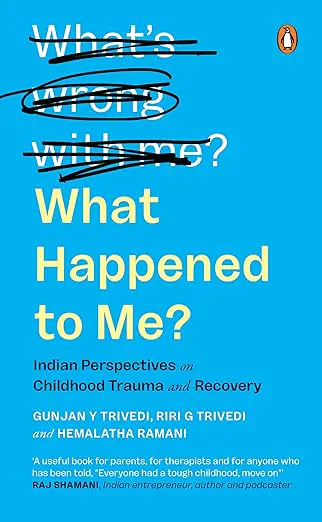
The PsyComplexity Scale™ is a structured classification system used at Wellness Space to triage psychotherapy clients before treatment begins, as detailed in our book “What Happened to Me? vs What’s Wrong with Me?: Indian Perspectives on Childhood Trauma and Recovery”.
It integrates four observable parameters — trauma exposure, suicidality, symptom severity, and behavioural challenges — into a single graded score that guides three early decisions: who needs to be seen first, by which therapist, and with what kind of expectations.
Alongside PsyKundali™, which holds the clinical picture together, and the Trivedi ACE-14 Assessment™, which sits on the same dashboard, the PsyComplexity Scale™ converts a complex, multi-layered story into a clear triage point. (Mental health triage is the process of assessing an individual’s psychological needs upon their first contact with a healthcare service. Its purpose is to evaluate the urgency of the situation and classify the person’s priority level so they receive safe, timely, and appropriate care.
Why triage matters in trauma work
Most people who come to therapy do not arrive with a single definitive diagnosis. They arrive with a tangle: panic that flares without warning, shame that won’t lift, relationships that keep collapsing, a body that won’t settle, a sense of not quite being inside their own life.
Conventional diagnostic systems try to sort this one category at a time — anxiety here, depression there, perhaps PTSD if the trauma was recent and definable. But for many people, the distress isn’t sitting in one place. It moves across emotional, relational, and physiological domains, all at once, with a logic of its own.
Without triage, three clinical errors become common:
- High-risk clients get scheduled like lower-risk clients, and the system reacts only when something escalates.
- Lower-risk clients get over-pathologised and locked into long therapy when self-regulation, lifestyle work, and shorter intervention would serve them better.
- Finally, for anyone unsure whether to seek therapy, without a structured set of criteria, the individual tends to get confused. Hence, PsyComplexity Scale™ can be a powerful screening tool to guide you whether to explore therapy or not.
Hence, PsyComplexity Scale™ based triage solves all of the above. It is not a label — it is a routing decision.
The Four Triage Criteria
The PsyComplexity Scale™ uses four yes/no questions. Each positive answer adds one point (total score: 0–4).
- Childhood Trauma Exposure: Repeated childhood adversity such as abuse, neglect, family instability, or household dysfunction. The positive assessment for this question is based on a specific level as identified by Trivedi ACE-14 Assessment™.
- Suicidal Thoughts or Attempt History: Current suicidal thoughts or any past suicide attempt. This criterion is treated with the highest priority, even if other scores are low. (Note: If you are having thoughts of suicide, please reach out today rather than waiting.
Tele-MANAS — 14416 or 1-800-891-4416. Free, 24/7, available in multiple Indian languages) - Ongoing Mental Health Symptoms: Persistent symptoms such as anxiety, depression, insomnia, or low well-being that continue despite self-care or lifestyle changes. This is articulated based on the PsyKundali™ dashboard.
- Repeated Behavioural Difficulties: Recurring struggles such as self-harm, relationship problems, emotional eating, addiction, impulsive behaviour, unexplained body pain, or exposure to violence. We have clear criteria based on the number of challenges involved.
With the guidance of our therapists, you can gain this perspective, which sets the framework for future work.
What the score tells us
| Score | Triage band | What it suggests |
| 0 | Low complexity | Distress is real but contained. Self-regulation, lifestyle support, and brief work are usually sufficient. |
| 1–2 | Some complexity | A graded approach — self-help and lifestyle first, therapy added if patterns persist. |
| 3–4 | Higher complexity | Professional, trauma-informed work is essential. These clients typically need more experienced therapists (1,500+ hours of independent practice) and a longer arc of recovery. |
What the data shows
The PsyComplexity Scale™ was developed and refined across more than 2,000 assessments at Wellness Space. Across that work, a consistent pattern emerges: as the complexity score rises, depression and anxiety scores rise with it, and childhood adversity measured by the Trivedi ACE-14 Assessment™ tracks the same direction. Above a score of 1, depression and anxiety routinely cross accepted clinical thresholds.
This is why scores of 3 and 4 are treated as requiring experienced trauma-informed clinicians rather than brief intervention. The pattern is not a judgement call; it is what the intake data consistently shows.
Detailed figures, instruments and score distributions are set out in What Happened to Me? vs What’s Wrong with Me?
Symptoms the scale helps make sense of
The same scale that triages complexity also helps a clinician name what they’re seeing:
- Emotional dysregulation — feelings that arrive too fast, too big, or too flat
- Persistent shame and self-criticism that don’t respond to evidence
- Hypervigilance, startle responses, and the inability to fully rest
- Relationship instability — repeated cycles of closeness, conflict, and withdrawal
- Numbness, dissociation, or a sense of watching life from behind glass
- Panic, intrusive memories, or somatic symptoms with no clear medical cause
- Identity disturbance — uncertainty about who you are when alone
These overlap across anxiety, depression, PTSD, and CPTSD presentations. The PsyComplexity Scale™ helps recognise the pattern across them, rather than forcing a single label.
“Complex trauma rarely looks like one thing. That’s exactly why it’s so often missed.”
Who this is for
- Adults who feel that the diagnoses received so far don’t quite explain what they live with day to day.
- People in long-running therapy who sense progress is slower than it should be because something deeper hasn’t been named.
- Therapists and mental health professionals working with clients whose presentations span multiple categories and resist tidy formulation.
- Finally, the PsyComplexity Scale™ can guide you in identifying where you are in terms of the problem and what the next course of action could be.
Frequently asked questions
- Is the PsyComplexity Scale™ a diagnosis of CPTSD?: No. It is a conceptual framework and assessment lens that helps recognize complex trauma patterns. CPTSD is a clinical diagnosis made by qualified professionals; PsyComplexity Scale™ may help the mental health professional identify the risk of CPTSD. For perspective, at Wellness Space we have very clear, measurable criteria for pursuing CPTSD assessment, and some of them overlap with what is covered in the PsyComplexity Scale™.
- My therapist has only given me one diagnosis. Does that mean PsyComplexity Scale™ doesn’t apply?: Not necessarily. Single diagnoses can be accurate and still incomplete. The framework is most useful when the lived experience feels broader than the label — that is often a signal worth investigating.
- Can complex trauma actually heal?: Yes. Recovery from complex trauma is typically longer and more layered than from a single-incident trauma, but it is well-documented in clinical research and in our own practice. The first step is naming the pattern accurately.
- Is this only for severe cases?: No. Complex patterns exist on a spectrum. Many highly functional people carry quiet, persistent distress that fits this framework, and benefit from it.
The broader argument for why mental health systems need a triage layer is set out in “Mental Health Has a Triage Problem,” published on CPTSD India.
Our Book on childhood trauma (What Happened to Me? vs What’s Wrong with Me?: Indian Perspectives on Childhood Trauma and Recovery) has more details
The concepts behind PsyComplexity Scale™, PsyKundali™, Trivedi ACE-14 Assessment™, trauma recovery, and the Pancha Kosha Trauma Framework™ are discussed in detail in our evidence-based book, What Happened to Me?
By Gunjan Y Trivedi, PhD (Last reviewed Aug 2026)
Contact us for a consultation
PsyKundali™ assessments and interpretation sessions are available through consultation at Wellness Space, Ahmedabad.