
Trivedi Depression Pathways™: A Trauma-Informed Model for Recurring Depression

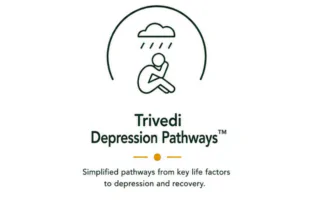
Trivedi Depression Pathways™: A Trauma-Informed Model for Recurring Depression Depression isn’t one illness. It’s many doorways into the same room — and each one needs a different key. Why "just depression" is rarely just depression For decades, depression has been talked about as one thing — usually framed as a chemical imbalance, usually treated with one class of medication. That framing has helped many people. But it has also left many others wondering why the standard approach hasn't been enough, or why their depression keeps returning even after "successful" treatment. Part of the reason is that depression rarely arrives alone.

Trivedi Depression Pathways™: A Trauma-Informed Model for Recurring Depression2026-05-23T17:48:21+05:30

Pancha Kosha Trauma Framework™: 5-layer approach to trauma recovery

Trauma doesn’t live in just one place. Neither does recovery. Pancha Kosha Trauma Framework™ is a Pancha Kosha–informed approach that conceptualises trauma and recovery as layered processes across body, energy, mind, insight, and inner well-being, enabling structured understanding and intervention. Why one layer is never enough Most contemporary trauma frameworks stop at one or two layers — the cognitive, sometimes the behavioural, occasionally the nervous system. But anyone who has lived with trauma knows better. Trauma does not stay neatly confined to a single part of you. It surfaces in the body that refuses to settle, in the breath that

Pancha Kosha Trauma Framework™: 5-layer approach to trauma recovery2026-05-27T15:03:15+05:30

PsyComplexity Scale™-Tool to understand “What happened to me?”

PsyComplexity Scale™-Tool to understand "What happened to me?" Your experience doesn’t fit a single diagnosis — because it isn’t supposed to.’ The PsyComplexity Scale™ is a structured classification system used at Wellness Space to triage psychotherapy clients before treatment begins, as detailed in our book "What Happened to Me? vs What's Wrong with Me?: Indian Perspectives on Childhood Trauma and Recovery". It integrates four observable parameters — trauma exposure, suicidality, symptom severity, and behavioural challenges — into a single graded score that guides three early decisions: who needs to be seen first, by which therapist, and with what kind of

PsyComplexity Scale™-Tool to understand “What happened to me?”2026-05-23T13:30:24+05:30

Trivedi ACE-14 Assessment™ | Understanding Childhood Trauma in India

Trivedi ACE-14 Assessment™-Understanding Childhood Trauma in India A childhood trauma (Adverse Childhood Experiences) assessment built for the Indian context, building on the original ACE10 questionnaire by Dr Felitti. Trivedi ACE-14 Assessment™ is a 14-item ACE-based assessment adapted for the Indian context that captures childhood trauma exposure, frequency, and contextual factors, integrating a structured interpretation approach to support risk understanding and informed therapeutic planning. The original Adverse Childhood Experiences (ACE) study transformed how the world thinks about early trauma. It is established, with overwhelming evidence, that what happens in childhood echoes through adult mental and physical health for decades. But the

Trivedi ACE-14 Assessment™ | Understanding Childhood Trauma in India2026-05-22T11:53:05+05:30

PsyKundali™-An Integrated Psychotherapy & Childhood Trauma Assessment Framework

PsyKundali™ is an integrated psychotherapy dashboard developed and used by Dr Gunjan Y Trivedi and the team at Wellness Space (Ahmedabad).  It visualizes childhood trauma and various assessment outputs, clinical patterns, and recovery pathways in a unified interface, enabling structured, personalized, and data-informed therapeutic decision-making. Understanding yourself, not just your symptoms Modern mental health care often hands you a single label — anxious, depressed, burned out — and a generic intervention to match. In other words, it is based primarily on the question – “What’s wrong with you?” However, human distress is rarely that tidy. Two people with the same

PsyKundali™-An Integrated Psychotherapy & Childhood Trauma Assessment Framework2026-05-22T11:44:52+05:30
Go to Top