
PsyKundali™ is an integrated psychotherapy dashboard developed and used by Dr Gunjan Y Trivedi and the team at Wellness Space (Ahmedabad). It visualizes childhood trauma and various assessment outputs, clinical patterns, and recovery pathways in a unified interface, enabling structured, personalized, and data-informed therapeutic decision-making.
Understanding yourself, not just your symptoms
Modern mental health care often hands you a single label — anxious, depressed, burned out — and a generic intervention to match. In other words, it is based primarily on the question – “What’s wrong with you?” However, human distress is rarely that tidy. Two people with the same diagnosis can have wildly different childhood histories, nervous system patterns, and reasons their symptoms persist.
This is where we need to focus on “What happened to you?” PsyKundali™ was built to change that. Developed over years of psychotherapy practice, trauma assessment, and recovery tracking at Wellness Space, it is an integrated psychological assessment dashboard designed to reveal the deeper patterns underlying emotional distress, trauma responses, resilience, and nervous-system dysregulation, and to map the most viable path to recovery.
Inspired by both modern psychometrics and Indian frameworks of self-understanding (Pancha Kosha Trauma Framework™), PsyKundali™ brings together structured assessments, trauma-informed insights, and longitudinal tracking into a single evidence-based view of who you are and how you are doing.
What PsyKundali™ helps you see
- Therapy complexity – to understand the challenges expected and, accordingly, match therapist expertise with the individual.
- Childhood trauma footprint – Using culturally validated, India-specific Trivedi ACE-14 Assessment™[1]
- Hidden emotional imprints from childhood that may be contributing to anxiety, depression, burnout, or relationship difficulties.
- Resilience and recovery resources you already carry, often without recognising them.
- Complex trauma indicators that may be missed by symptom-only diagnostic models.
- Additional perspectives, as needed, through parenting style assessment, financial well-being, self-esteem, loneliness and more.
- Progress over time — changes in scores across therapy, so you and your therapist can see what is shifting.
Who this is for
PsyKundali™ supports two groups.
- Individuals who feel stuck, overwhelmed, or repeatedly drawn back to the same patterns — and who want a clearer, more honest picture of what is driving their distress.
- Mental health practitioners who are looking for a structured, longitudinal way to assess clients, track recovery, and move beyond single-label diagnosis.
How it works
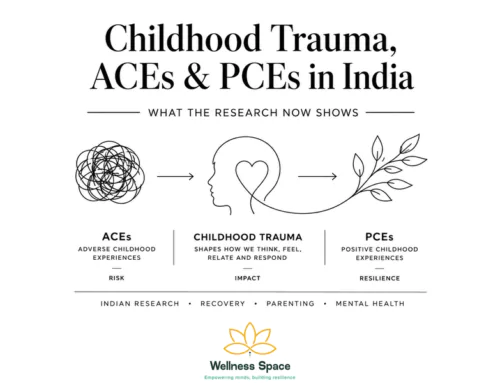
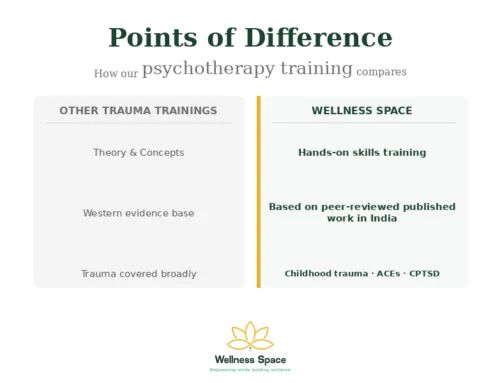
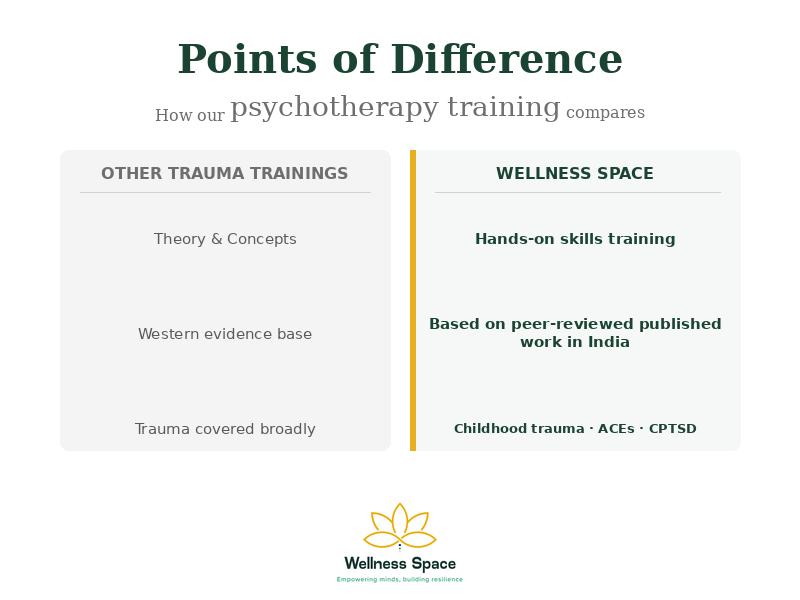
The PsyKundali™ dashboard integrates insights from childhood trauma research, resilience studies, and the Pancha Kosha Trauma Framework™ (See Figure 1). The result is a multi-layered profile that treats the person as a whole — not as a collection of isolated symptoms. It helps identify “What happened to me” for the individual and a potential area to focus on for mental health practitioners.
“We don’t reduce people to diagnoses. We give them a map of themselves.”
Figure 1 – PsyKundali™ dashboard snapshots
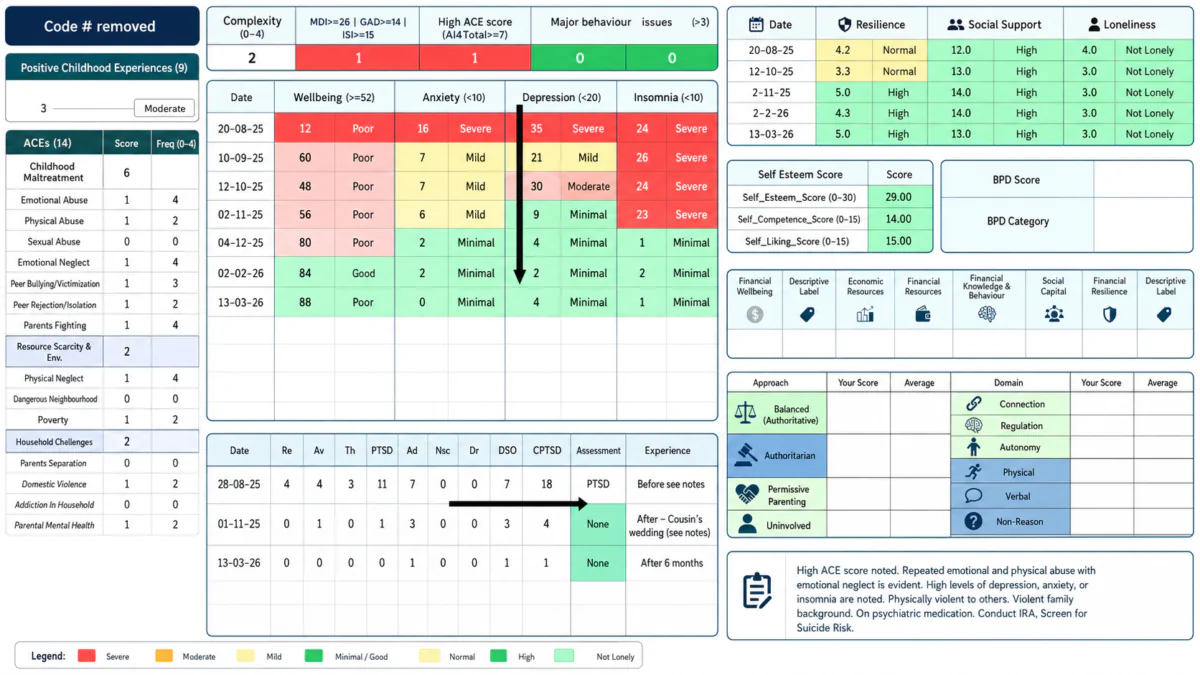
PsyKundali™ integrates childhood trauma, resilience, emotional regulation, and psychotherapy assessment into a single recovery dashboard.
Frequently asked questions
- Is PsyKundali™ a diagnostic tool? No. It is an integrative assessment dashboard that complements clinical assessment. It is designed to give a richer, longitudinal picture of psychological functioning rather than to replace formal diagnostic procedures. Most of the content in PsyKundali™ is based on self-assessment, with occasional assistance from personal consultation.
- Can I use PsyKundali™ without being in therapy? PsyKundali™ is most useful within a therapeutic relationship, where a trained practitioner can help interpret the dashboard and shape an evidence-based recovery plan. For practitioners, it can be integrated into existing assessment workflows.
- How is this different from a standard psychometric test? Standard tests typically measure one construct at a time. PsyKundali™ brings several validated dimensions together: childhood trauma exposure, loneliness, depression, anxiety, subjective well-being resilience, and symptom patterns — and tracks them across time, so change is visible rather than assumed. It also integrates decision making based on existing datasets and provides specific tasks or perspectives (e.g. level of complexity through PsyComplexity™.
- Is my data confidential? Yes. All assessment data at Wellness Space is held under strict clinical confidentiality, used only to support your care or, with explicit consent.
More details:Our Book has more details: The concepts behind PsyKundali™, PsyComplexity™, trauma recovery, and the Pancha Kosha Trauma Framework™ are discussed in detail in our evidence-based book, What Happened to Me?
Case study: If you wish to take the tour of the PsyKundali™ Dashboard, check out the case study video below by Dr Gunjan Y Trivedi. Contact us for consultation: PsyKundali™ assessments and interpretation sessions are available through consultation at Wellness Space, Ahmedabad. |

References:
[1] Trivedi, G. Y., Surana, P., Pandya, N., Patel, N., Trivedi, R. G., Kathirvel, S., & Kumar, A. (2025). Psychometric properties of expanded Adverse Childhood Experiences Assessment Questionnaire at a wellness centre in India. Asian Journal of Psychiatry, 104523