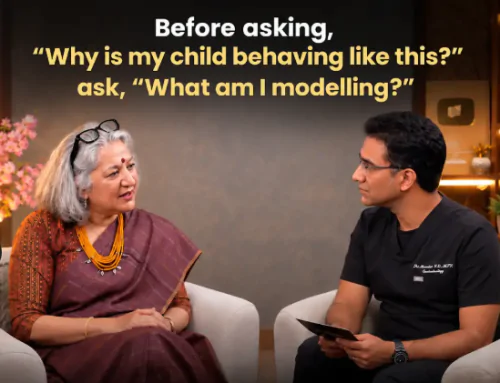

The Biggest Parenting Mistakes: Gentle Parenting, Teen Anger and Screen Addiction
Most parents love their children. So why do so many end up with kids who don’t listen, lash out, or stop talking to them by their teens? On The Secret Sauce, filmmaker and entrepreneur Mukul Deora puts that question to psychotherapist, researcher and author Dr Riri G. Trivedi, co-author of This Book Won’t Teach You Parenting provides an Indian parenting perspective.
Her answer surprised many people. In 2026, she says, the biggest parenting mistake is no longer harshness. It’s giving in. Over two hours, she walks through the mistakes she sees most often, from tantrums and teenage anger to phones, fussy eating and the pressure to raise a perfect child, and what to do instead.
Listen on Apple Podcasts or Amazon Music.
In this episode
- The pendulum has swung from harsh to permissive. Riri recommends authoritative parenting: warmth with clear structure and rules.
- In a tantrum, calm your own body first. Logic can’t reach a child in fight-or-flight.
- Your children can be your biggest triggers. Your reaction shows you what is still unhealed in you.
- Ask whose problem it is. If it’s your child’s, let them solve it.
- Stop using the phone as a threat for everything. It makes the phone more important, not less.
- There is no perfect parent. Mistakes are normal; repair is what matters.
Mistake 1: Giving in to every demand
Mukul asks Riri what the biggest parenting mistake is in 2026. Her answer: parents giving in far more to their children’s demands. She sees parents who are uncomfortable when a child is angry with them, who agree to things they had already refused, and who avoid confronting the child at all.
Today’s parents are far more mindful than earlier generations, she says. She no longer needs to tell them not to hit their children. But many have swung to the other extreme and become permissive and indulgent. What she recommends is authoritative parenting: structure, discipline and teaching children to accept “no”, alongside warmth.
Mukul offers one reason. His generation spent childhood seeking their parents’ approval, and now seeks it from their children as well. When you need your child to call you the best parent on the planet, saying no gets much harder.
Mistake 2: Reacting to a tantrum from your own panic
Riri describes two kinds of tantrum. A deliberate tantrum aims for a response that has worked before; the giveaway is a child who keeps checking what the parent is doing. A meltdown is different. The child is overwhelmed, tired, hungry or overstimulated, and the survival part of the brain has taken over. In children of about three to eight, the part of the brain that controls impulses isn’t developed enough to calm down alone.
The mistake is what parents do next. A parent who grew up with shame often feels a hundred eyes on them in a mall, and reacts from the same panicked place: grabbing, shouting, threatening that the police will come, or giving in to end the embarrassment. Giving in teaches the child that next time the tantrum should last longer.
Instead, Riri says, stay firm and calm your own body first. Take a few deep breaths. Hold the child, or quietly pick them up and move away. Don’t reason or explain yet, because a child in fight-or-flight can’t take it in. Once their body settles, the thinking brain can listen again.
With young children, she suggests saying what you’re doing (58:04): “Mama will finish her breathing, then she’ll come and talk to you.” Letting a child cry for a few minutes while you calm down is fine. Children pick up your heart rate and muscle tension, so you can’t fake calm.
Mistake 3: Arguing with an angry teenager
The same brain science applies at 14, Riri says. The prefrontal cortex, which handles impulse control and empathy, keeps developing until about 25, and in the teenage years it is being restructured. What changes is how you respond. A teenager will push away a hug, and they know exactly which words hurt most. Riri admits that when her sweet daughter turned nine, she wondered if she’d given birth to a monster.
Her approach:
- Don’t take it personally. Let the words reach you without letting them in.
- Sit beside your teenager, or at an angle. Standing in front of them unconsciously puts you on the opposite side.
- Don’t lecture, advise or chase the last word. Validate the feeling (“I know not having the phone feels horrible”) and stay quiet.
- Have the real conversation later, in a calm moment: on a walk, in the car, over coffee. Ask what they think the problem is and let them help solve it.
The teenage years are a make-or-break period, she warns (15:07). Damage the relationship then, and adult children keep a polite, transactional distance. Handle it reasonably well, and the bond often grows once the teens are over.
Mistake 4: Labels, put-downs and public shaming
Asked for the worst mistakes parents make with teenagers, Riri lists:
- Labels: “you’re stubborn”, “you’re always angry”, “you never listen”.
- Running down their friends.
- Humiliating them in front of others. Adults tell her their deepest hurts came from things said in front of relatives, even as jokes.
- Predicting failure: “you’ll never make it in life”.
- Guilt-tripping and emotional blackmail: “Dad and I fight because of you”, or refusing to eat until the phone goes down.
Healthy shame and toxic shame (1:26:01). Healthy shame helps children live in society; it’s why we don’t hit people or break rules. Toxic shame is when the child, not the behaviour, is treated as the problem. “Lying is wrong” teaches a lesson. “You’re a liar” teaches a child that they are flawed. Constant correction of clothes, hair and posture can build the same inner critic.
Children raised in toxic shame often blame themselves for everything as adults, from a breakup to a ruined event. Riri says that when her team studied people who had attempted suicide, emotional abuse, emotional neglect and heavy self-criticism were common across the group.
If you or someone you know is struggling, call Tele-MANAS on 14416 (free, 24×7).
Mistake 5: Letting your triggers decide how you react
“Your children can be your biggest triggers.”
If you haven’t healed wounds from your own childhood, Riri says, your children will find them, through traits that remind you of someone or the words they use. When it happens, notice what you feel: anger, rage, helplessness, guilt, shame or fear. That feeling points to what is still unhealed. Leave it alone, and a spouse, a friend or a daughter-in-law will press the same spot later.
“When you are not triggered, you have the power in your hands to choose your response.”
Children also copy what they see (21:41). A child who is yelled at yells back. A child who is hit may hit others at school. Riri’s clients tell her the abusive words they heard from their fathers still come out of them when they’re triggered, despite their education and success.
Her toolkit (53:29): tell your child you’re getting upset and need two minutes, then step away. Hum, chant, breathe from the belly or punch a pillow, and come back. It shows your child that it’s fine to pause when upset, and you’ll respond differently afterwards. And skip the power struggle (55:39). Nine out of ten things don’t need an immediate reply, and “let’s talk about it this evening” is not weakness.
Mistake 6: Solving problems that belong to your child
Riri’s first question is: whose problem is it? If a child loses a match, falls out with a friend, or gets scolded for incomplete homework, it’s the child’s problem. The parent’s job is to ask questions that help them solve it: what happened, how did it feel, what do you want to do now?
One father told Riri he drove his 10-year-old an hour and a half to a tennis class, only to find the boy had no shoes. The boy said his mother forgot to pack them; the father agreed, yelled at his son, and drove all the way back. Riri’s view: let him sit out the class. One hour of other children asking why he isn’t playing will teach him to pack his own bag for life.
Let them sit with disappointment (36:12). Don’t rush to fix it, or distract with ice cream or a new phone. Acknowledge the feeling, stay close, and talk it over 12 to 24 hours later. With younger children, she suggests breathing the disappointment out like blowing up a balloon, or tapping. The path from disappointment to recovery is one the child has to walk.
Protect and prepare (35:56). When children are small, parents protect more. As they grow, the balance has to shift towards preparing them.
Mistake 7: Turning the phone into a brahmastra
Riri sees phone addiction in children as young as five or six (29:47). She describes a 10-year-old who broke crockery around the house whenever his phone was taken away, the same withdrawal pattern she sees in other addictions. Many parents, she adds, are addicted themselves.
One of her most practical points is to stop confiscating the phone as the punishment for everything, from not eating to crying.
“Don’t make the phone the brahmastra.”
Using it as the ultimate threat makes the phone the centre of the child’s world. Give a fixed daily allowance, and use consequences that relate to what actually happened.
Teenagers and screens (1:39:02). Snatching or locking away a teen’s phone rarely works. Talk in a calm moment about what eight hours a day is doing, and ask how you can work on it together. Riri’s own daughter once left her a note asking not to be given her phone for three days before an exam, even if she shouted for it.
Passwords and privacy (1:40:49). Riri’s rough guide: parents should have access from about 10 to 13, tread carefully from 13 to 16, and step back after 16 if the child has shown responsibility. Never check secretly. Teenagers find out, trust breaks, and they learn to hide things better. Above all, make sure they know they can call you when they’re in trouble, and that your reaction can wait. Safety comes first.
Devices at the table (1:37:32). Children who eat in front of a screen don’t notice when they’re full. Make it a family rule, not a child’s rule: everyone’s devices go in a box at mealtimes.
Mistake 8: Chasing the perfect child
Mukul describes the checklist many parents carry: topper, sports star, punctual, respectful and humble. Riri says the pressure works at first, because perfectionism does produce results. Then comes burnout. The child performs for their parents’ approval and loses track of what they actually want.
Her answer is the 80/20 rule from her book (43:31). Out of ten things you want to change, pick two, usually safety and core family values, and let the rest go. She also discusses it with Dr. Pal in why emotionally neglected kids struggle as adults.
She asks parents to see behaviour through a child’s eyes. When her four-year-old son kept spitting at a girl on the school bus in Singapore, she wanted to disappear. He was simply curious what spitting at a face would be like. All he needed was a calm “we don’t do that”. Young children experiment; it doesn’t make them bad.
Praise less, but mean it (1:24:33). Overpraising everyday tasks, like putting a plate away, teaches children to work for praise. Acknowledge what’s expected and appreciate what goes beyond it. Confidence comes more from being allowed to voice an opinion, even when the answer is still no.
Mistake 9: Doing everything for them
“If your child can survive without you, that is the best sign of parenting.”
Riri meets mothers who can’t take a break because their 10- and 12-year-olds “won’t survive” (51:43). She also sees Indian students sent abroad after Class 12 who have never managed anything alone, and who either go wild or shut down.
Her book lists age-appropriate chores. Three- and four-year-olds can set out bowls, pack their bag at night and water the plants. A 10- to 12-year-old can go to the local shop alone. Give your helpers a day off sometimes so children do the work, and involve children in caring for grandparents; it’s how they learn caregiving.
Exposure matters too. Riri sees children who rarely meet relatives or unexpected guests developing social anxiety. Take them to family functions, even if a teenager negotiates staying for just an hour.
Mistake 10: Turning mealtimes into battles
When a child is stressed at the table, Riri explains, the body goes into fight-or-flight and digestion takes a back seat. A plain roti eaten calmly, she says, does more good than vegetables forced down in tears.
Her approach is structure with choice. Everyone eats at a set time. The child chooses from what’s been cooked, and no separate meal is made on request. If the child isn’t hungry, the plate is covered and put away, calmly and without punishment. Children are born knowing when they’re full, she says, and constant rules about quantity can teach them to ignore that signal. She saw the difference in her own children: her daughter, fed by a nanny, took years as an adult to read her fullness cues; her son, allowed to stop when he wanted, didn’t.
Riri is clear that this doesn’t apply to children with medical conditions. If you’re worried about your child’s growth or weight, follow your paediatrician’s advice.
What emotionally resilient kids have in common
Resilient children, Riri says:
- don’t break down after every failure, and learn from their mistakes
- are confident in themselves, whether or not they’re outgoing
- have social support, even if it’s one or two close friends
- can ask for and offer help, and get along with people of different ages
- make their own small decisions without running to a parent each time
An introverted child can have all of these, she adds. Introverts are often fine listeners and observers. Help them build a strong sense of self, since outside validation won’t come as easily.
Does harshness build resilience? (23:44) Mukul raises famous tennis players pushed hard by their fathers, and the conversation turns to Andre Agassi, who wrote in his memoir that he hated tennis. Riri’s answer is that stress you can learn from is good, but abuse isn’t a training method.
“It’s like saying, I never wore a seat belt but I am still alive. That doesn’t mean you don’t wear a seat belt.”
Children of very authoritarian parents and of very permissive parents are both more prone to addiction, she says. Push towards growth, never to breaking point, and make sure it’s the child’s dream, not yours.
Quality time that actually counts
Quality time, in Riri’s definition, means phones off, no agenda, no advice and no correcting. For young children, a fixed daily slot of 15 to 30 minutes works best, with the child choosing the activity. With two children, give each one-to-one time; it eases sibling rivalry. With teenagers, build it into something you both enjoy, like cycling, cooking or watching a show together.
When you get it wrong: repair
Riri is candid: in real life, parents manage perhaps 50 to 60% of what experts recommend. There will be days you lose your temper. What matters is that it doesn’t become a pattern, and that you repair it afterwards. Parenting, she says, isn’t a Six Sigma project.
How to apologise (1:58:38). Leave out the “but”. “I’m sorry I yelled, but you were misbehaving” cancels the apology.
“Everything you say after a but gets nullified.”
Name what you did, say it was your mistake, and mean it.
When parents disagree (1:55:07). Some difference between parents is healthy, Riri says; children learn that people differ. Trouble starts when one parent is very strict and the other compensates by being lenient, pulling each other to extremes. Don’t argue or blame each other in front of the children, and consider dividing areas where each parent has the final say.
Breaking the cycle (1:45:48). Many parents hear their own mother or father coming out of their mouths. Riri says insight alone doesn’t change this, because these patterns are held in the body. Start with self-regulation so you can pause before reacting. For deeper change, she recommends therapy that works on memory, not talk-based counselling alone.
Protect, prepare and let go
Asked for the secret sauce to raising a happy, healthy child, Riri points to Kahlil Gibran’s poem “On Children”, which opens her book. Children come through their parents, not from them. Parents are the bow: they bend and give stability, but they don’t decide where the arrow lands. Start with protection, move towards preparation, and trust your child.
There is no perfect parent and no perfect child, she says, so enjoy the journey. For the full framework, including the chore lists, calming techniques and the 80/20 rule, read This Book Won’t Teach You Parenting.
Frequently asked questions
What is the biggest parenting mistake today? According to Riri, it’s giving in too much. Many parents avoid conflict with an angry child and agree to demands they had refused. She recommends authoritative parenting instead.
What is authoritative parenting? It combines connection with structure. Parents listen and stay calm, but they set limits, teach discipline and hold to them. Riri contrasts it with both harsh and permissive parenting.
How should I handle a tantrum in public? Stay calm and don’t give in. Calm your own body first, then hold the child or quietly move them away. Explain later, once they’ve settled.
Should parents know their teenager’s passwords? Riri suggests access from about 10 to 13, an open, careful approach from 13 to 16, and stepping back after 16 if the teen has shown responsibility. She advises never checking in secret.
How do I apologise to my child? Without a “but”. Say what you did, own it as your mistake, and mean it.
More from Riri
- Why emotionally neglected kids struggle as adults, with Dr. Pal
- How childhood trauma shapes adult life, with Dr. Pal
Read the book, or talk to us
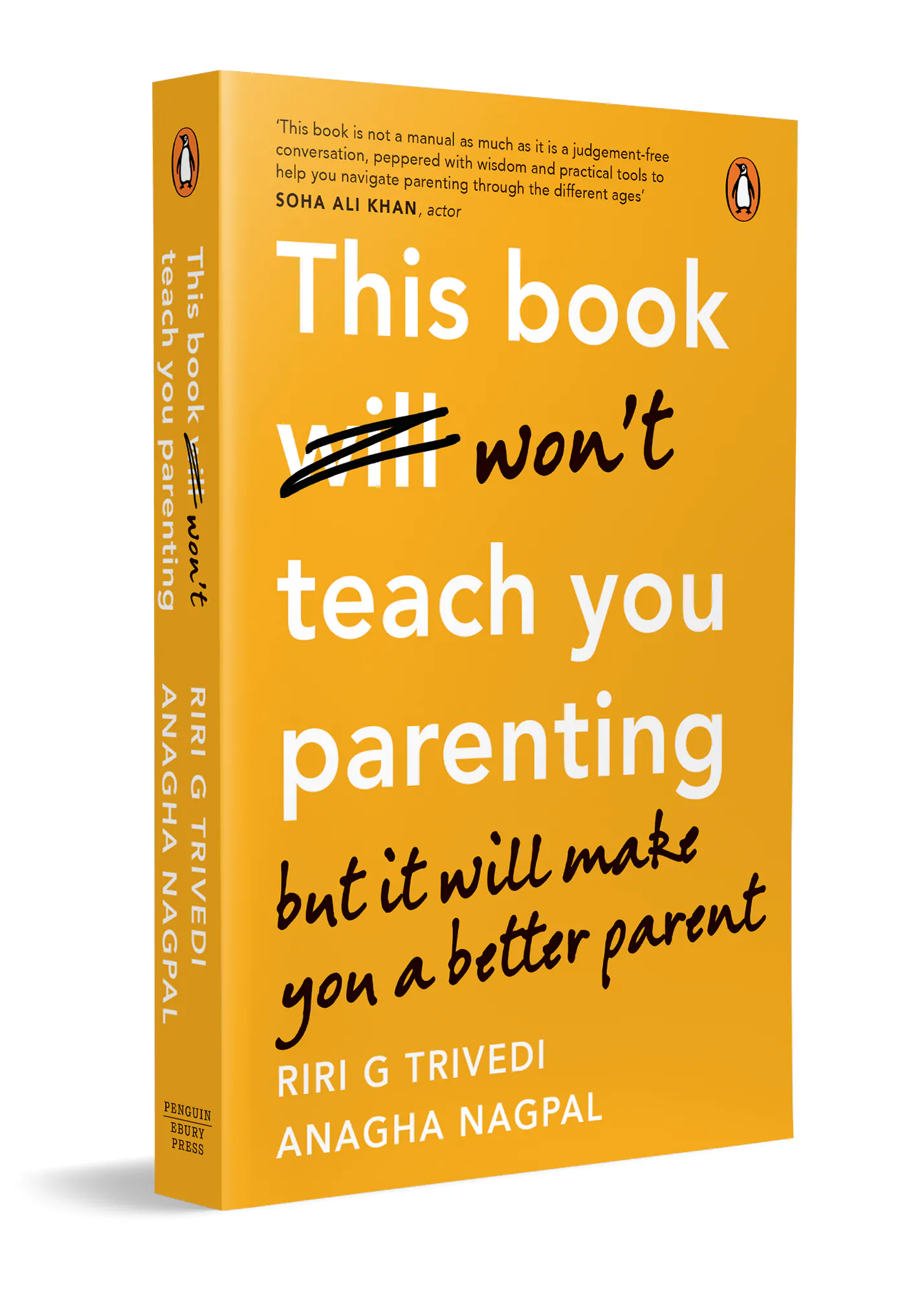
For parents: This Book Won’t Teach You Parenting Riri’s book with parent coach Anagha Nagpal, on raising emotionally secure children without repeating your own patterns. Read about the book
Talk to a therapist If parts of this conversation felt familiar, you don’t have to work through it alone. Wellness Space offers individual therapy for adults whose struggles trace back to childhood, including Inner Child Therapy. After a first consultation, the team recommends the approach that fits you. See how therapy works.
Not ready to talk yet? Take the free ACE quiz to see how your childhood experiences may still be shaping you.