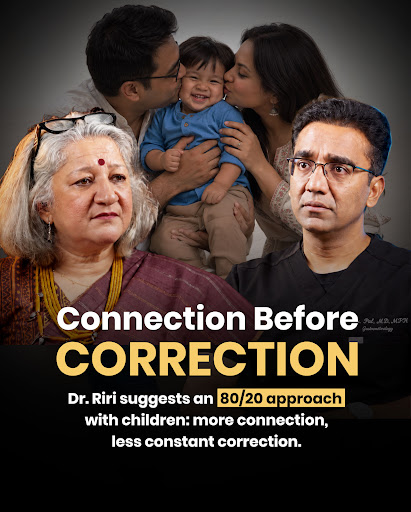

All About Her is a conversation-led podcast hosted by Soha Ali Khan, bringing together personal experiences and conversations around contemporary life, relationships, wellbeing and parenting. In Episode 8, Soha is joined by Kareena Kapoor Khan and Dr Riri G Trivedi for a conversation about positive parenting and what it can look like in everyday family life.
Kareena Kapoor Khan brings the perspective of a mother reflecting on her own approach to raising her children, while Soha Ali Khan contributes both as the host and as a mother sharing experiences from her own parenting journey. Dr Riri G Trivedi brings a psychological and parenting perspective to the discussion, helping unpack questions around warmth, boundaries, discipline, parental reactions and the patterns adults may carry from their own childhoods.
Rather than presenting parenting as a question of being either “strict” or “lenient,” the conversation explores how parents can combine emotional connection with clear boundaries. It also touches on difficult but common situations, including losing one’s temper, physical punishment, parental expectations, children’s growing independence, screens and social media, difficult questions, and the influence of one’s own upbringing on parenting.
This page brings together the key ideas discussed in the episode, along with evidence-informed context to help parents understand what positive parenting means, how it differs from permissive or authoritarian approaches, and what parents can do when everyday parenting does not go according to plan.
Episode Timestamps and Show Notes
Click any timestamp to open the video at that moment.
What makes parenting “positive”
- 00:00 Opening: there are no perfect parents. Why staying connected matters as children start experimenting and move into their teens, and why parenting means learning as you go.
- 03:47 Meet Dr Riri Trivedi. Soha introduces Dr Riri, whose work focuses on childhood trauma, emotional wellbeing and conscious positive parenting.
- 06:05 Why call it “positive” parenting? Most parents mean well, but good intentions paired with harmful methods don’t lead to good outcomes.
- 07:09 Kareena on the balancing act of motherhood. Loving, protecting and teaching two children at once, and why she is still learning.
Parenting styles
- 09:02 The four parenting styles. Dr Riri explains the research model built on two things: how warm a parent is and how much they expect.
- 13:51 Balanced parenting, and do Kareena and Saif parent alike? Boundaries plus warmth, what it builds in children, and how two different styles work in one home.
How we hurt, and how we change
- 18:30 How comparison and pressure hurt children. Parents can wound without meaning to, and Kareena finds her sons engage more when she pushes less.
- 23:18 Breaking the cycle. Why we automatically repeat our parents’ patterns, and how awareness and pausing before reacting help us stop.
Parenting in the public eye
- 36:42 Raising children under public scrutiny. Parenting in a digital world where everyone has an opinion on how your child behaves.
- 40:53 Taimur, the paparazzi and his own identity. How Taimur got used to cameras, and is starting to think about achieving something of his own
What is Positive Parenting?
Positive parenting is not permissive parenting. It is the practice of staying warm and staying firm at the same time, setting clear limits without withdrawing affection to enforce them.
Positive parenting means combining emotional connection with clear, consistent boundaries. The goal is not to remove frustration, disagreement or consequences from family life. It is to respond to children in ways that preserve connection while still providing structure.
For parents, this means moving away from the idea that authority requires fear, shame or emotional withdrawal. A child can be told “no” while still knowing that they are loved. A parent can hold a boundary while remaining curious about what the child is experiencing.
In practice, positive parenting asks two questions at the same time: “What does my child need from me emotionally?” and “What boundary or guidance does my child need from me?”
According to Dr Riri Trivedi: “The opposite of positive parenting is not negative parenting. Even parents who use threats, punishment or sometimes violent methods to raise children genuinely believe they are doing it for the better of the child. The reason we emphasize positive is because if the methods are not correct, then the outcomes may not be positive.”
The message parents need to communicate is clear: “You have to do certain things, there are demands, there is a boundary, but there is connection and children respond to this.”
Positive Parenting vs Gentle, Permissive and Authoritative Parenting
These terms are often used interchangeably, but they are not identical. Positive parenting emphasises both emotional connection and clear, consistent boundaries. Gentle parenting places greater emphasis on empathy and emotional safety, while permissive parenting tends to involve warmth with fewer boundaries. Authoritative parenting combines warmth with clear expectations and age-appropriate limits.
The important distinction is that positive parenting does not mean permissive parenting. Children can experience warmth, respect and connection while still being given boundaries and guidance.
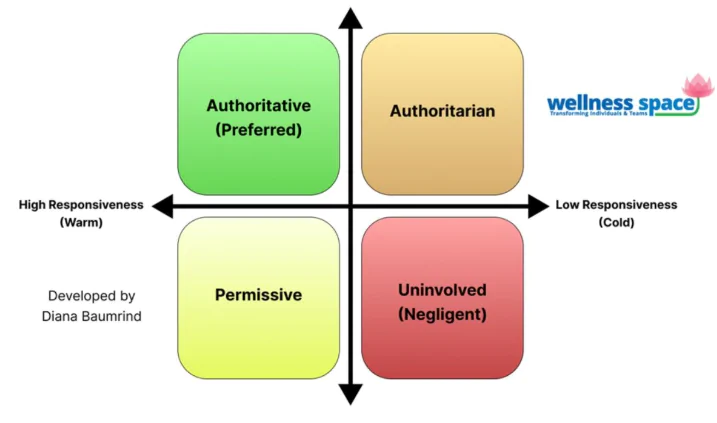
For a more detailed explanation of these parenting styles and their effects on children, see our Parenting style assessment (PSDQ)
What Kareena Kapoor Khan said About Warm, Loving Parenting
Kareena describes her parenting: “I have to strike that balance between loving your two children and kind of protecting them as well as teaching them as well as kind of making them understand things.”
She notes that Saif is “extremely brave, loving, caring, always there,” and often the more relaxed parent, while she acknowledges being “over protective and a helicopter mom.” This balance works: “I think it’s what mothers and fathers kind of balance it out.”
Most useful insight from her mother Babita: “Warm and loving parenting with a strict and vigilant watch.” This is captured as having “two eyes in front and two at the back.”
Soha Ali Khan: Parenting Through Difficult Moments
Soha Ali Khan’s contribution makes the conversation especially relatable because she speaks not only as the host, but also from her own experience as a mother. Her examples bring the discussion of positive parenting into the everyday situations in which parents have to balance encouragement, expectations, boundaries and their child’s emotions.
The conversation touches on several questions that many parents encounter today:
- How different parenting styles can coexist within a family
- Managing expectations placed on children
- Physical punishment and its impact
- Recognising when we may have unintentionally hurt our children
- How our own childhood experiences influence the way we parent
- Supporting children’s growing independence
- Navigating public attention and the paparazzi
- Social media and screen use
- Responding to difficult questions, including questions about sex
- Deciding what to retain — and what to change — from more traditional or “old-school” approaches to parenting
When encouragement becomes pressure
One particularly relatable moment comes when Soha shares an experience involving her daughter’s piano recital. She describes encouraging her daughter to participate even though her daughter did not initially want to. When she realised that her approach had made her daughter feel bad, Soha recognised what had happened and apologised.
She then reassured her daughter:
“It’s alright if you don’t want to go. When you’re ready to come, I’m here.”
Her daughter eventually chose to participate and went on to do well.
The value of this example is not that parents should avoid encouraging their children or protecting them from difficult experiences. Rather, it illustrates the difference between pushing a child toward an outcome and remaining connected while giving the child space to make a choice.
For parents, the question can therefore shift from “How do I make my child do this?” to “How can I encourage my child while keeping our relationship safe?”
That distinction is central to positive parenting: connection does not mean removing expectations, and setting expectations does not require withdrawing connection.
What Dr Riri Trivedi Highlights: Breaking the Cycle
One of the important themes Dr Riri Trivedi brings to the conversation is how our own upbringing can influence the way we parent. The discipline, expectations, affection and ways of handling conflict that we experienced as children can sometimes become patterns we carry into our own families.
The conversation also explores the possibility of breaking these patterns. A parent who experienced harsh discipline, for example, may consciously decide to parent differently with their own child. Becoming aware of these influences can create an opportunity to pause, reflect and choose a different response rather than automatically repeating what was experienced growing up.
This idea of awareness is an important part of changing intergenerational patterns: understanding where our reactions come from can help us become more intentional about how we respond to our children.
What Actually Helps: The Pause That Changes Everything
One of Dr Riri Trivedi’s most practical insights in the conversation is the importance of pausing before reacting.
As she puts it:
“It’s only a matter of few seconds. I tell you, if you manage that few seconds, you crack it.”
Those few seconds can create space between a parent’s emotional trigger and their response. Instead of reacting immediately, a parent can take a breath, recognise what is happening, acknowledge the child’s emotions and then address the behaviour or boundary more calmly.
The pause does not mean ignoring difficult behaviour or removing boundaries. It creates an opportunity to stay connected while still being clear and firm.
For parents, the practical idea is simple:
Pause → regulate yourself → acknowledge the child’s experience → respond to the behaviour or boundary → move forward.
The goal is not to become a parent who never loses their temper. It is to create enough space to respond more intentionally when difficult moments arise.
Key Takeaways for Parents:
- Warmth and boundaries can coexist.
- Connection does not mean saying yes to everything.
- Address behaviour without attacking worth.
- Parents don’t have to be perfect to build healthy relationships.
- After conflict, repair matters.
- Understanding your own upbringing helps you choose how to parent.
- The pause — even a few seconds — is where change happens.
FAQ
Q: What is positive parenting?
A: Combines warmth, connection and responsiveness with clear, appropriate boundaries. Staying warm while staying firm.
Q: Is positive parenting the same as gentle parenting?
A: They overlap but aren’t identical. Gentle emphasises respect and safety. Positive combines high warmth with explicit clear boundaries.
Q: Is positive parenting permissive parenting?
A: No. Permissive offers warmth without firm boundaries. Positive requires both.
Q: What should I do after shouting at my child?
A: Repair: Regulate, acknowledge, take responsibility, reconnect, restate boundaries, move forward.
Q: How can I stop repeating my own parents’ patterns?
A: Notice automatic reactions. Identify what you learned. Choose deliberate alternatives. Start with the pause.
Ready to understand your patterns more deeply?
If you recognise some of these patterns in yourself or your relationships and would like professional guidance, Wellness Space offers consultations to help you explore your concerns in a safe, supportive and structured setting.
Book a consultation with Wellness Space.