
Past Life Regression Therapy: How, What, Who?
Past Life Regression Therapy (PLRT) is a therapeutic process that explores memories, experiences or impressions a person encounters as belonging to a past life, and works with what surfaces to address a difficulty in the present: an unexplained fear, a relationship pattern that keeps repeating, or a physical symptom with no medical cause. It is one branch of regression therapy.
The question is usually asked with some mixture of curiosity, apprehension and plain disbelief, and that is a reasonable place to start from. You do not have to accept any claim about reincarnation to work this way.
People experience past life regression differently. Some individuals recall a life vividly and in sequence, while others perceive less distinct sights, sounds, sensations or feelings. Some find themselves speaking words that appear to belong to a language they do not know. For many, it feels like invention, or like a distant, dreamlike reality that is theirs and not theirs at once.
The goal of Past Life Regression Therapy is not to relive past events. It is to establish how insights from past life events and emotions connect to a present-day difficulty, and to work with that connection toward healing, transformation, and integration.
What Is Regression?
Regression means going back in time.
Every time you remember something — from five hours ago, five days ago, five years ago — you are returning to an earlier experience. Regression therapy uses that ordinary capacity deliberately.
The work involves revisiting earlier experiences, from this life or from past lives, to explore the possible roots of fears, phobias and emotional patterns. Finding the origin is only half of it. The other half is transforming what is found and integrating the insight into how you live now.
At Wellness Space, we integrate past-life regression work with inner-child integration therapy, hypnotherapy, and more. Sessions typically involve a state of focused relaxation similar to clinical hypnosis, though not every approach used here requires a formal trance — bridging techniques and body-based methods are also used, depending on what the person is working with.
How Past Life Regression Therapy Works: The Wellness Space Framework
The framework here distinguishes the physical body from subtler energetic aspects of a person.
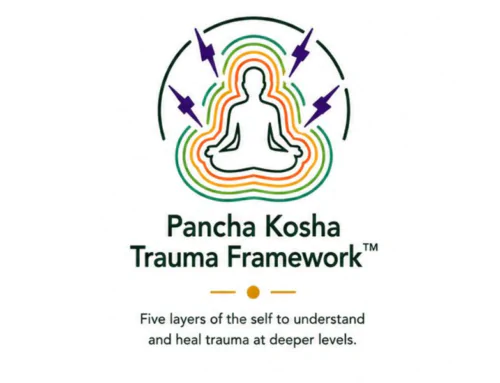
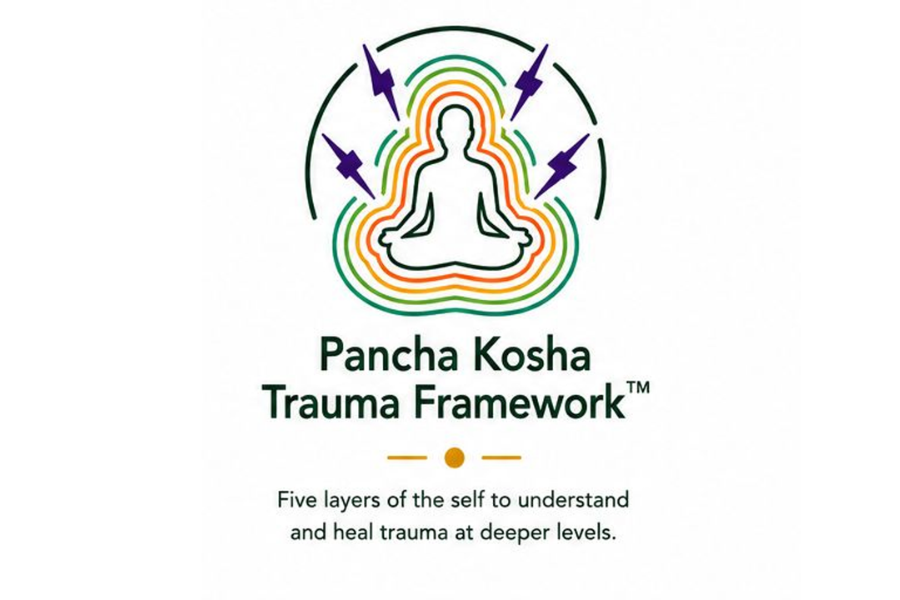
The five koshas
The physical body, or Annamaya Kosha, is the tangible structure — cells, nerves, tissues, organs. Yogic terminology describes four subtler sheaths beyond it:
- Pranamaya Kosha — the energetic or vital layer, associated with breath and life force
- Manomaya Kosha — the mental and emotional layer, where thought and feeling move
- Vijnanamaya Kosha — the layer of discernment, intuition and deeper knowing
- Anandamaya Kosha — the innermost layer, associated with a settled sense of being
Pancha Kosha Trauma Framework™: 5-layer approach to trauma recovery
Within this framework, the physical body is matter; the other koshas are subtler and energetic. The proposition is that although the physical body dies, these energetic aspects continue, carrying imprints of experiences from lives already lived. Experiences involving intense emotion — trauma, or the moment of death — are understood to leave the strongest imprints.
These imprints sit deep in the unconscious or primitive mind. They are not needed for present-day functioning, but they can shape instinctive responses. When an appropriate trigger activates one, an old emotional or visual experience may surface, sometimes producing a strong physical or emotional reaction with no obvious explanation in the person’s current life.
Signs a Past-Life Imprint May Be Active
Experiences that may be worth exploring:
- Unexplained fears or phobias
- Déjà vu
- Recurrent visions
- Unexplained aches or pains
- Birthmarks
- Sudden familiarity with unfamiliar people or places
- Recurring patterns in behaviour or relationships
None of these is proof of anything on its own. They mark a place worth looking at.
What Past Life Regression Therapy Can Help With
- Difficulties that current-life memory does not account for
- Unexplained physical sensations, aches and pains
- Repeating relationship patterns
- Déjà vu, recurring visions and recurring dreams
- Sudden familiarity with people or places
- Fears and phobias with no current-life explanation
- Recurring emotional and behavioural patterns
None of this constitutes proof of past-life origin. Within this approach, these are areas for exploration, and the measure of the work is whether it changes something in the present.
Life Between Lives
Replace above with? (Life Between Lives (LBL) looks at what happens between lifetimes, not just at a single past life. It’s a wider view of who you are — how you connect to the lives you’ve lived, to other souls, to guides and teachers, and to whatever you’re working through right now.
Past life regression usually zooms in on one life and one specific difficulty. LBL does something different: it looks for patterns that repeat across many lives, and for the sense of direction you’re carrying today. Most people do it after they’ve already had some regression work, rather than as a first session, and it takes longer.
People also come to it for different reasons. Less often to fix a particular problem — more often when the question on their mind is bigger: what is this life actually for?)
Your Past Life Regression Therapist
Dr Riri G Trivedi conducts Past Life Regression Therapy sessions at Wellness Space and trains practitioners in regression and hypnotherapy.
She holds a Diploma in Regression Therapy from the Past Life Regression Academy and is a member of the Spiritual Regression Therapy Association, having trained in Singapore. Certified Past Life Regression Therapist | Wellness Space
Past Life Regression is also taught at Wellness Space as part of the Integrated Regression Therapy and Life Coaching certification, accredited by IPHM, and the practice has received research funding from the Earth Association of Regression Therapy to study anxiety and regression therapy.
Past Life Regression Therapy Training in India | Wellness Space
Frequently Asked Questions:
Will I remember everything during the session?
Yes, you are awake all the time. Past Life Regression is done in a peaceful meditative trance state, and you remain fully conscious and aware.
The experience may vary from person to person. Some recall a vivid past life with all the details of the event(s). Some report sights, sensations or feelings with less clarity. Some even find themselves speaking in the language of that past. This is one of the most prevalent concerns customers have. More on how a session goes down →
Will I be able to come back after going into a past life?
Yes, this is the most prevalent fear that individuals bring, and it is a normal one. Before any regression occurs, each session begins by describing the idea and process and addressing just these fears. You are in charge, and you can stop the procedure at any time. Read Dr Riri Trivedi’s Insight on this question →
Can You Do PLRT Without Believing in Past Lives?
Yes. You can do this work without believing in reincarnation and without labelling what surfaces as a past life.
If you are sceptical, treat what emerges as material the subconscious has produced for therapeutic purposes — a metaphor, a construction, a way of representing something that has no other language. That reading costs the work nothing. The scene functions the same way either way: it holds an emotional charge, the charge can be worked with, and the working changes something.
Afterwards, most people question whether what they experienced was real. That question is left open here. What matters is whether the session produced insight, release or a shift in the difficulty you came in with.
What if I feel I’m just making up a story?
That’s how it’s usually experienced, not a clue it’s not working. For a lot of people, it seems like writing a story. For some people it seems like a dream. Then, the logical mind often challenges the experience and traces it to a recently viewed film or a book. We do not interpret subconscious material with the logical brain. The label is not important, but the change the session makes is.
Is Past Life Regression the same as regression therapy?
PLR is one branch of it. Regression involves going back in time to discover the root of a present problem and can be used to study the current life (Current Life Regression, Age Regression, Inner Child Regression) or an earlier form of existence. Your therapist suggests the technique after learning your needs, and it isn’t usually the one you came in requesting; clients with high Adverse Childhood Experience scores, for example, are often better served by inner child work first. How we select the approach →
Can PLR help with fears and phobias?
It is one of its major applications. PLR therapy is utilised for fears, phobias, medical disorders with no known cause, déjà vu, nightmares, toxic relationships and repeated patterns in life that may have roots in former lifetimes, especially when the reaction doesn’t seem to fit with anything that has happened in this life. Past-life material can take the form of birthmarks, unexplained aches and pains, recurring visions, or an unexpected sense of familiarity with people or places you’ve never been to. View a case study →
Can relationships be explored in a session?
Yes. Connections between what surfaces and your current life relationships are identified and worked with during the session.
How long is a typical session, and how many sessions will I need?
A typical PLR session runs 1.5 to 2 hours and is conducted by Dr Riri G Trivedi for therapeutic purposes. What is a past life regression session? A perspective and insights
This depends on what you are working with and is decided after your initial consultation. We take a refundable deposit of six sessions to lock in your therapist’s schedule, and track progress with self-assessment forms after every 4, 8 and 12 sessions, along with follow-up calls. As issues resolve, we begin reducing the frequency of sessions rather than continuing indefinitely. Our full therapy process →
What happens if something distressing comes up?
Difficult material is expected — it is usually why the pattern is still active. The session does not stop at revisiting a memory: the connection to your present issue is established, healing and transformation are done so the imprint’s effect on your current life is reduced or nullified, body memories are released, and the session closes only after everything is integrated and you are future-paced with the insights gained. You will also be taught self-regulation techniques to manage your emotional health between sessions. PLR has clear contraindications, and in some cases we ask for psychiatrist clearance before beginning. How we assess for potential risks →
What if nothing seems to happen?
That is a normal outcome, not a wasted session. People recall in different modes — visual, auditory, kinaesthetic — and in varying degrees, just as some remember childhood vividly and others barely at all. If a past-life narrative does not emerge, your therapist works with what does surface — a sensation, an emotion, a fragment — or shifts to another approach, such as current-life or inner-child work. See how the PLR sessions are measured.
Is the session confidential?
Yes. You are assigned a Unique Client Code under which all your information is stored, and this code — not your name — is used on assessment forms, therapy notes and progress tracking. A consent form is completed before therapy begins; for anyone under 18, a parent or guardian must sign it. Privacy Policy · Terms & Conditions
Can PLR sessions be done online?
Yes, the sessions are conducted both offline and online, at the convenience of both the therapist & client.
How do I book a session?
Start with the enquiry form, and we will respond with available therapists, sliding-scale fees and payment details. Enquire now →