This category captures the publications (Scientific and evidence based) developed by Society for Energy & Emotions (SEE) or by cofounders of SEE & Wellness Space
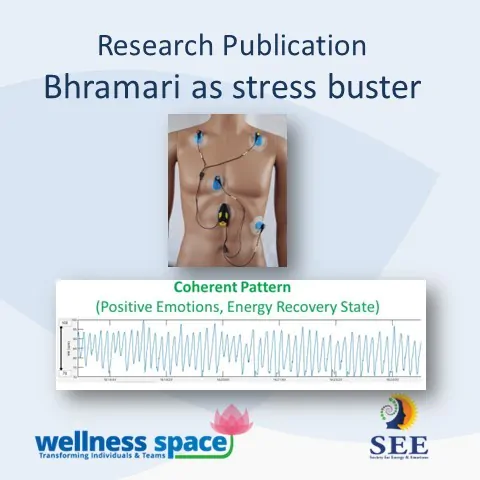
Publication – Bhramari (humming) as stress buster

Humming (Simple Bhramari Pranayama) as a Stress Buster: A Holter-Based Study to Analyze Heart Rate Variability (HRV) Parameters During Bhramari, Physical Activity, Emotional Stress, and Sleep A brief note on the article: Recent research by Gunjan in our team identified that Bhramari Pranayama (simple practice, without any mudras or hand gestures) could profoundly benefit heart signals (resulting in heart-brain coherence that improves physical and mental health).  This was validated by comparing the "heart signals" (known as heart rate variability analysis or coherence) during various activities (physical activity, emotional stress, sleep, and Bhramari), and the comparison demonstrated the outcome.  You

Publication – Bhramari (humming) as stress buster2024-08-14T11:43:19+05:30

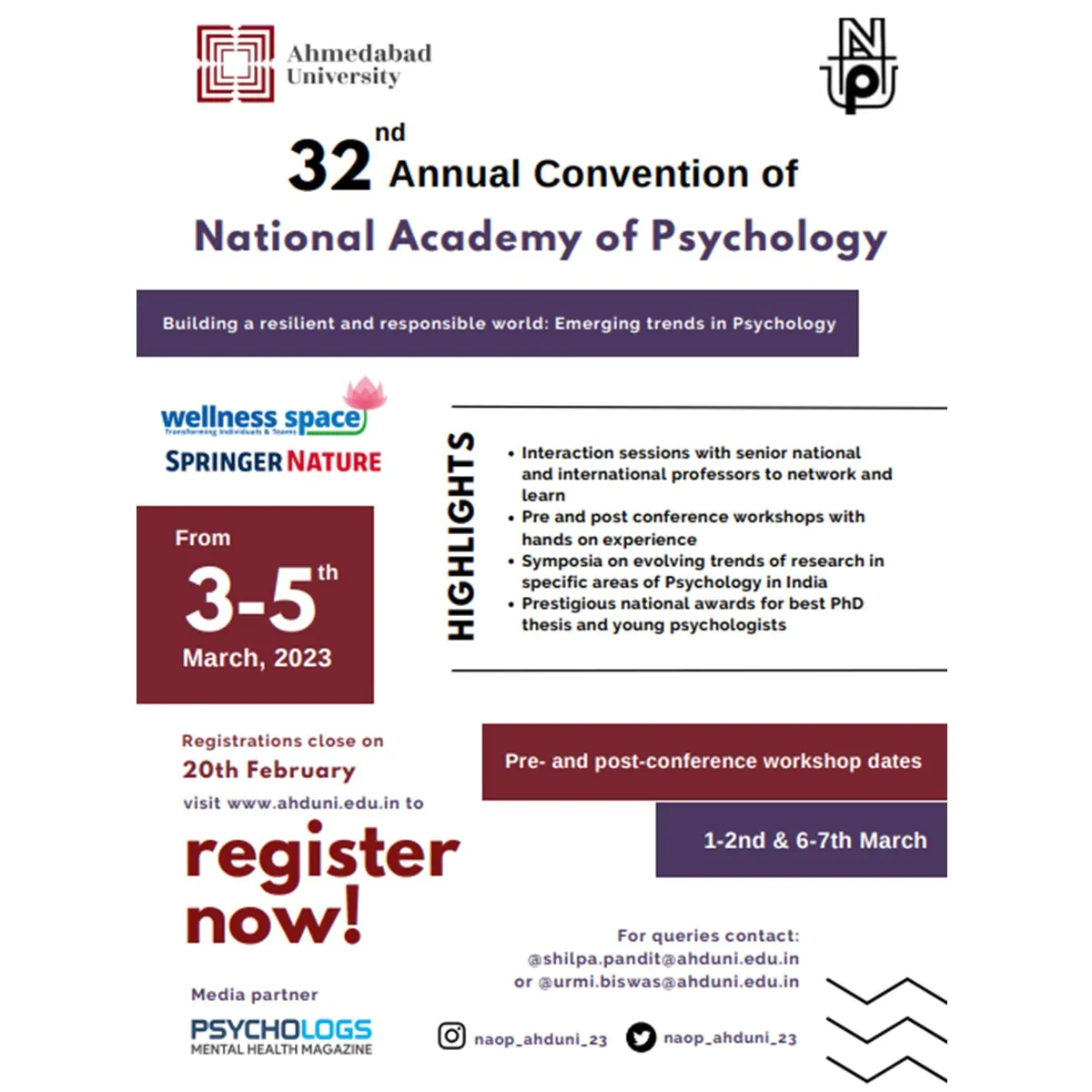
Wellness Space presentations at NAOP 2023 (Ahmedabad University)

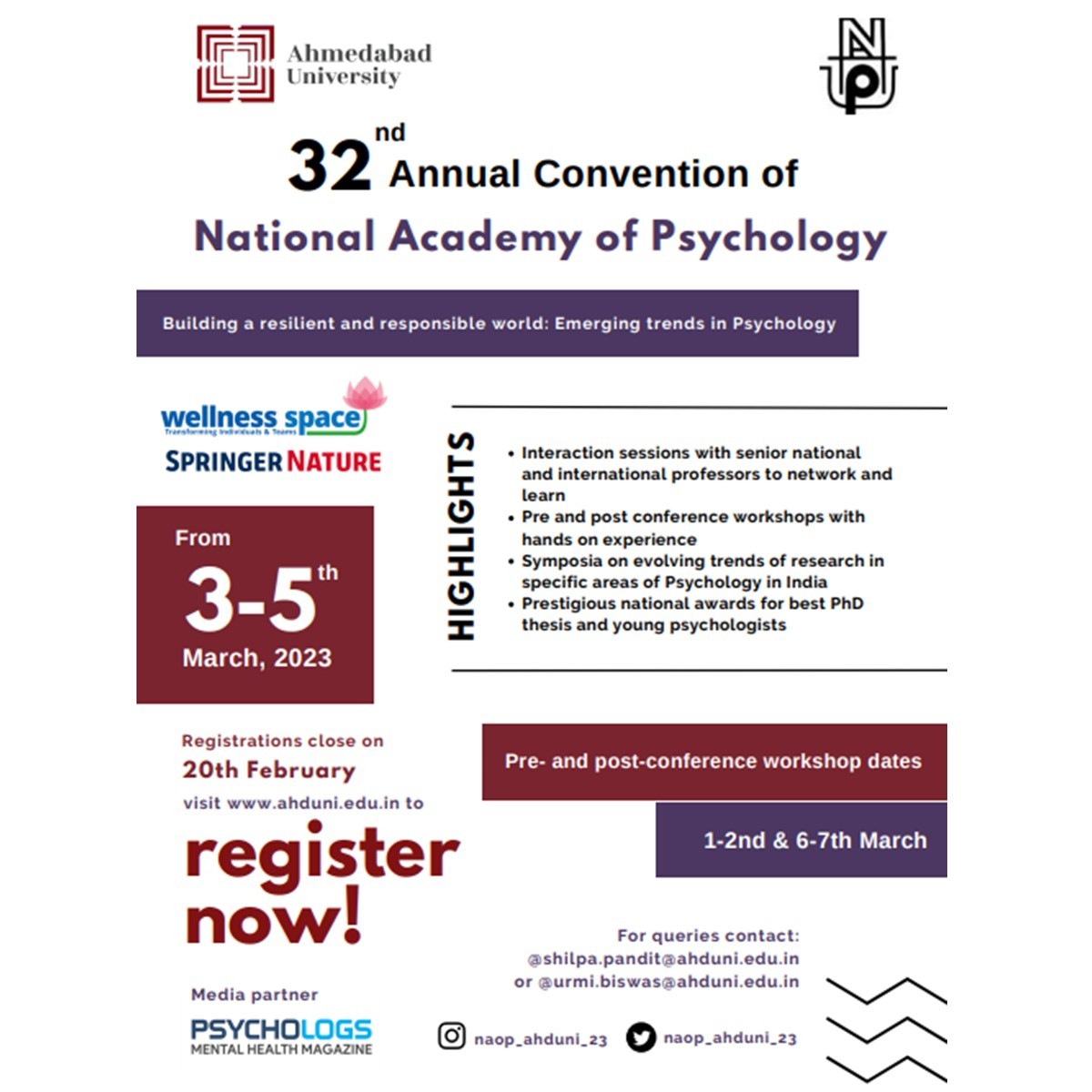
Team Wellness Space presents several abstracts at the 32nd Annual Convention of National Academy of Psychology,  NAOP 2023, at Ahmedabad University.  All the abstracts are listed below: Oral Presentation 1 - The impact of social media usage on well-being, anxiety & depression, sleep quality By Gunjan Y Trivedi ([email protected], +91.9574742288), Heer Vaghela, Hemalatha Ramani, Riri G Trivedi Abstract: Social media’s impact on mental health is well-documented and backed by scientific evidence. Based on review of literature, two hypotheses were propounded, 1) increased social media usage is linked to a negative impact on several mental health parameters, and 2) there

Wellness Space presentations at NAOP 2023 (Ahmedabad University)2025-05-21T12:23:50+05:30

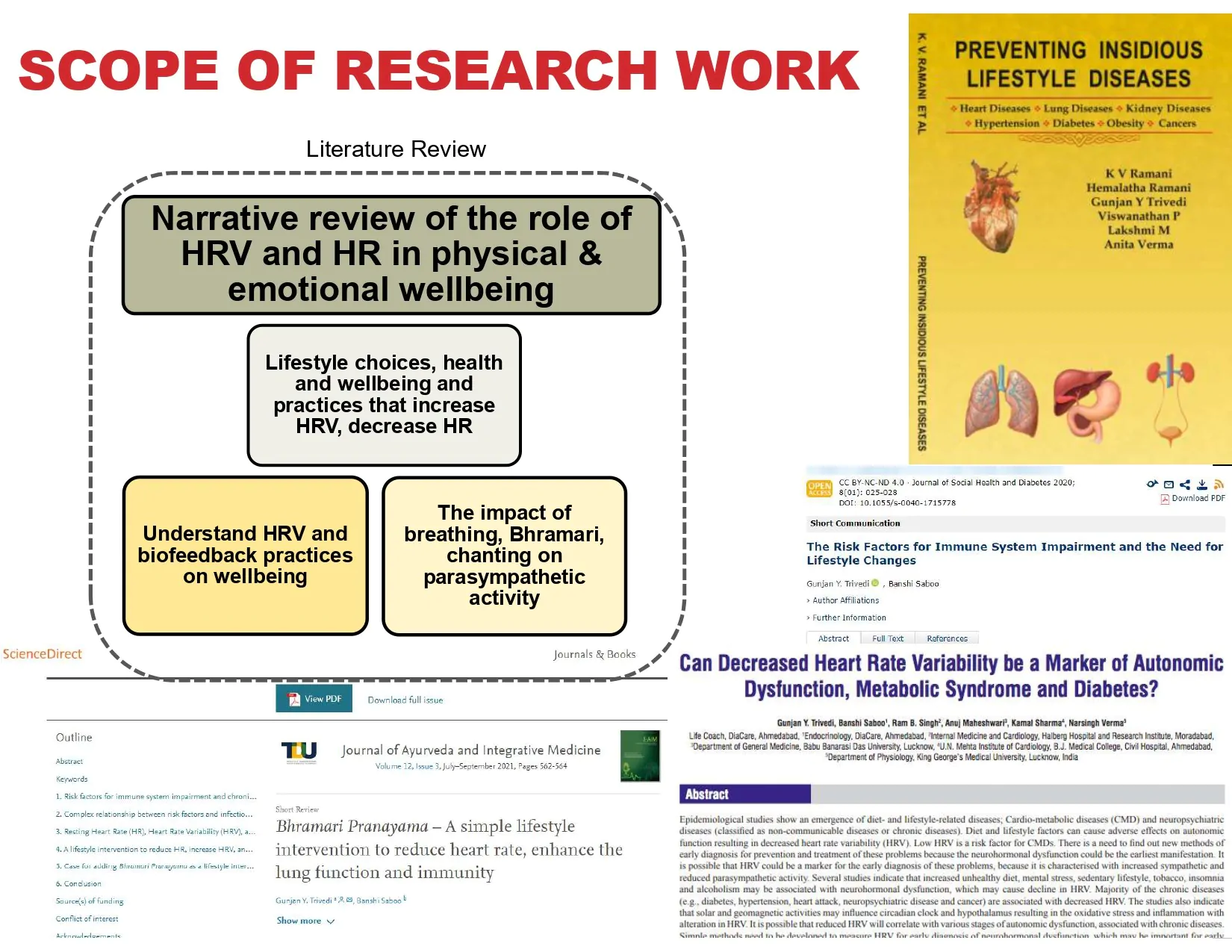
Summary of doctoral research – The impact of humming bee breathing (simple Bhramari Pranayama) practice on Heart Rate Variability and implications for healthcare management

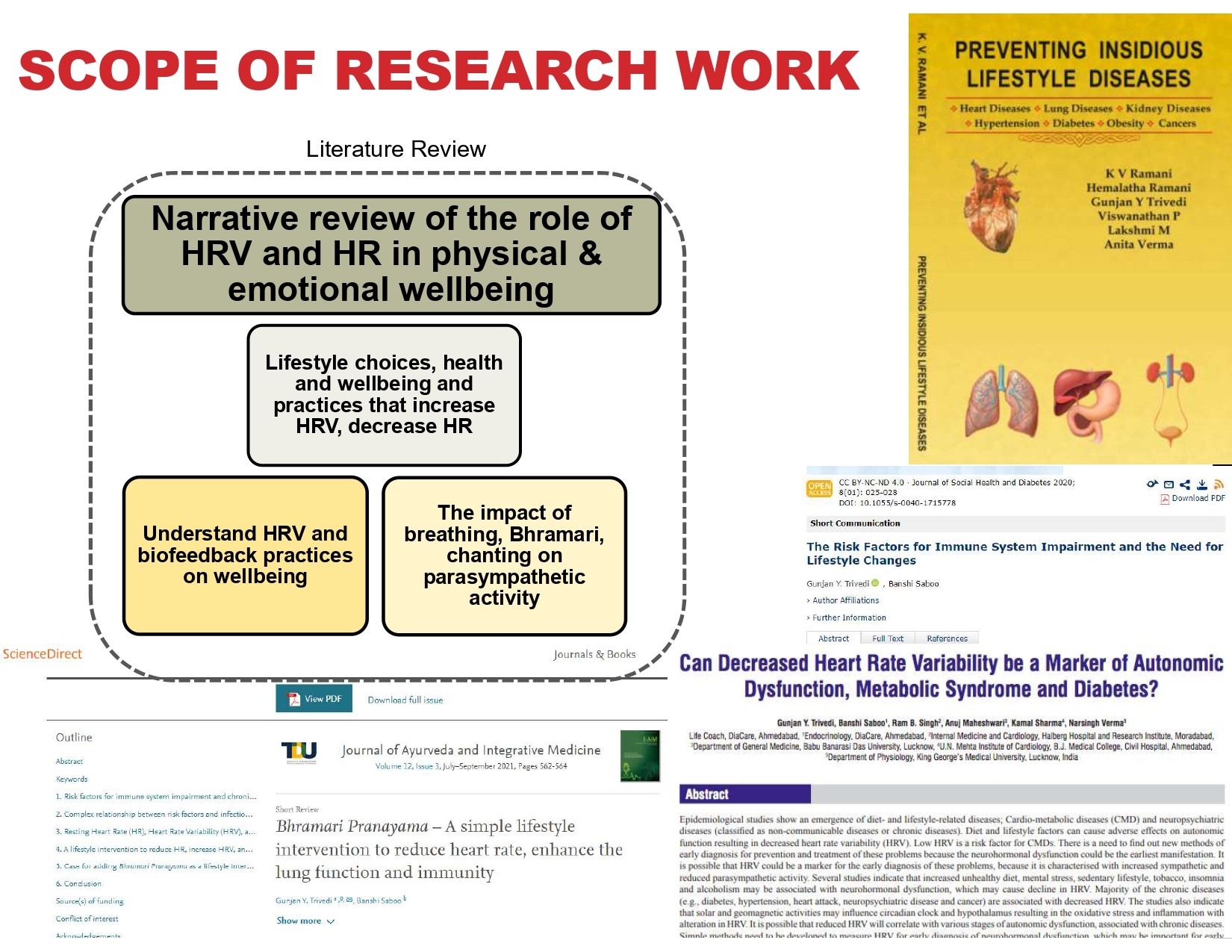
Gunjan Yogendra Trivedi's Ph.D. thesis: (Guide: Dr Saurabh Kumar, Ph.D, Co-Guide: Dr Banshi Saboo, M.D., Ph.D.). JJT University, Rajasthan, India (2022) Title: The impact of humming bee breathing (simple Bhramari Pranayama) practice on Heart Rate Variability and implications for healthcare management Abstract: There is an urgent need for governments and corporate enterprises globally to proactively manage lifestyle-related modifiable risk factors for chronic disease to reduce economic burden and increase the quality of life while decreasing the risk of chronic disease.  The need of the hour is a simple, effective, and low-risk solution with the potential for increased well-being, leading to sustainable

Summary of doctoral research – The impact of humming bee breathing (simple Bhramari Pranayama) practice on Heart Rate Variability and implications for healthcare management2025-05-21T12:48:23+05:30

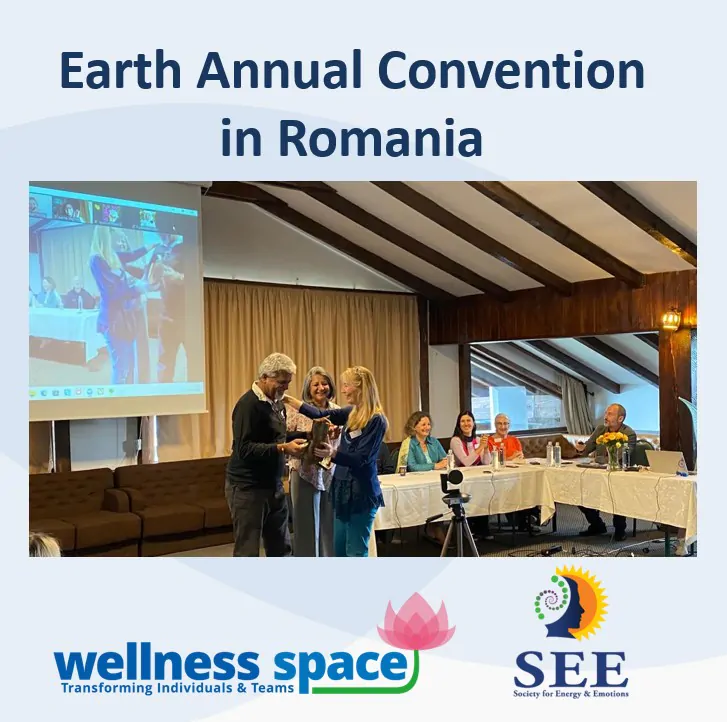
Presentations – Annual Convention of Earth Association of Regression Therapy (Romania 2022) – by Riri and Gunjan Trivedi

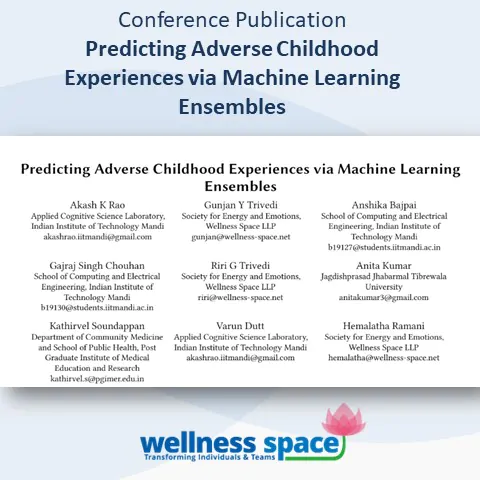
Recently, Riri and Gunjan participated in the Annual Convention of Earth Association of Regression Therapy in Romania. The theme of the convention was "Bridging Spirituality and Science in Regression Therapy" and Wellness Space was well represented by both Riri and Gunjan Trivedi through a talk as well as a workshop. The EARTh-AC22-Booklet covers details of not just the presentations we made but the entire program and other presentation details as well. A. Talk: Insights from our research on Adverse Childhood Experiences, Trauma and mental health (by Riri G Trivedi and Gunjan Y Trivedi) Several mental and emotional health conditions ranging

Presentations – Annual Convention of Earth Association of Regression Therapy (Romania 2022) – by Riri and Gunjan Trivedi2025-05-21T12:47:40+05:30

Evidence on Adverse Childhood Experiences, dissociative disorders, and attachment

This article provides a brief overview on the outcomes of ACEs (Adverse Childhood Experiences) with respect to dissociative symptoms and attachment disorders. Background:  Adverse Childhood Experiences, extreme stress, and dissociative symptoms There is considerable evidence regarding the relationship between childhood abuse or neglect and dissociation symptoms in adulthood with an earlier age of onset, as well as a longer duration of abuse and parental abuse significantly predicted higher dissociation scores. The relationship between ACEs and dissociation is fully mediated by mentalization; this means that the important predictive factor for dissociation is not if you have been abused as a child,

Evidence on Adverse Childhood Experiences, dissociative disorders, and attachment2026-04-30T18:05:08+05:30
Go to Top