
Letter to the Editor: The Role of Sleep Disruption and Negative Emotions as Risk Factors in Diabetes Management

Please read to understand the importance of negative emotions and sleep disruption as risk factors for diabetes (this is applicable to all chronic disease such as hypertension, heart disease, auto immune disorders and so on).  The conditions related to the mind - such as anxiety, phobia, depression - impact the balance of emotions. This results in what the psychologists call "negative affect" or negative mood. Persistent negative mood/emotions as the letter says increase the risk of diabetes or complications.  Same is true for sleep quality. Highlights (if you prefer to get a gist of the contents !)  The emerging evidence
Letter to the Editor: The Role of Sleep Disruption and Negative Emotions as Risk Factors in Diabetes Management2026-08-25T12:16:41+05:30

Publication: Importance of Screening for Wellbeing in Diabetes Management

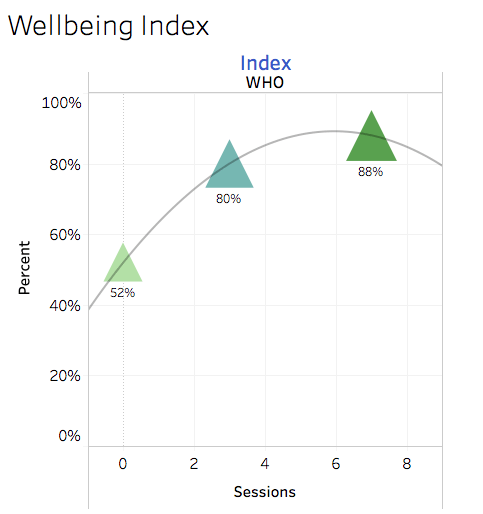
Background: Society for Energy & Emotions, Wellness Space uses WHO-5 wellbeing index and many other tools to measure the effectiveness of the interventions.  This approach is backed by review and actual data on the use of the tools.  The approach isn't limited to only surveys since use many other technologies to measure the "actual" physical body parameters.  This following review explored why it is better to measure wellbeing (instead of stress) and use it as a screening tool. Stress is complex to measure and has multiple factors involved. (a) the environment in which the trigger occurs (b) impact on the

Publication: Importance of Screening for Wellbeing in Diabetes Management2026-08-25T12:16:41+05:30

Publication: Importance of screening for Sleep Disorders (Chronic disease)

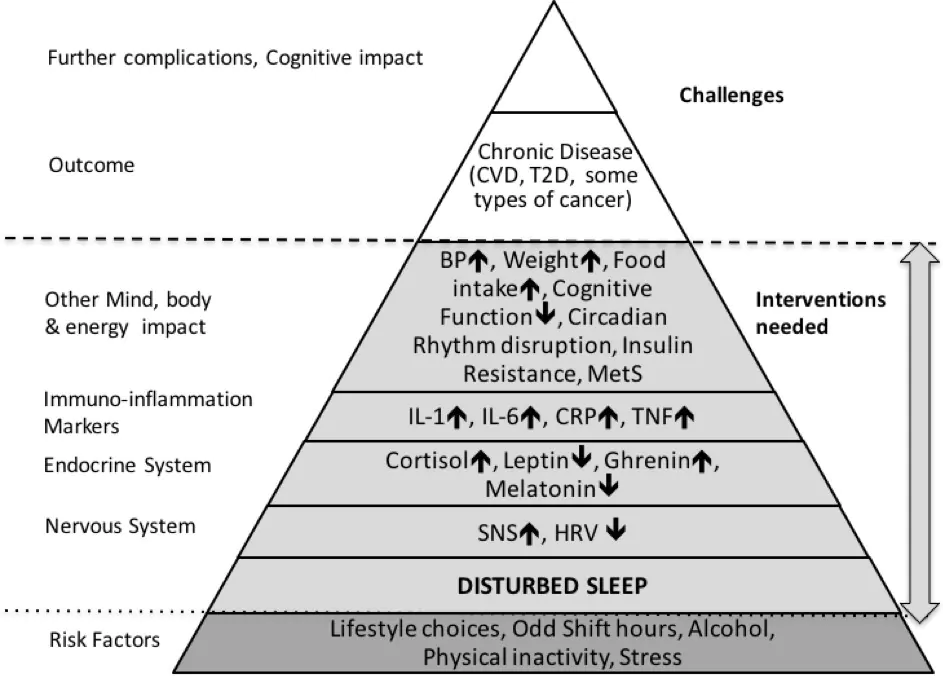
This article was published in the Journal of Clinical Diabetology, An Official Publication of Association of Clinical Diabetology (A National Conclave of Diabetologists), JCD – Vol 5 – Issue 3, (Gunjan Trivedi, Dr Banshi Saboo, Dr Dhruvi Hasnani, Dia Care, Ahmedabad) What's the message in this review ?  Quality of sleep is very important parameter and risk factor for good health and wellbeing.  Poor sleep results in more complications if you already have a chronic disease (non-communicable disease) and if you have chronic disease, it is highly likely that your sleep is disrupted.  Hence, this is a vicious cycle.  The

Publication: Importance of screening for Sleep Disorders (Chronic disease)2026-08-25T12:16:42+05:30

Case Study – Compulsiveness and Fear

He is not even in 20s and was recommended to us by his psychiatrist. He had a compulsive habit of stealing. He was stealing since he was in school but as he grew the amounts got larger. The parents finally had to seek help when he stole at the college with amount running into 5 figures. Unfortunately, he was expelled from the college. We started working with him on all peripheral issues - except stealing! Usually with OCDs or addictions we don’t directly work on the presenting problem because that is usually the outcome of something else - much deeper.

Case Study – Compulsiveness and Fear2026-08-25T12:16:42+05:30

RELATIONSHIP DRAMAS…..

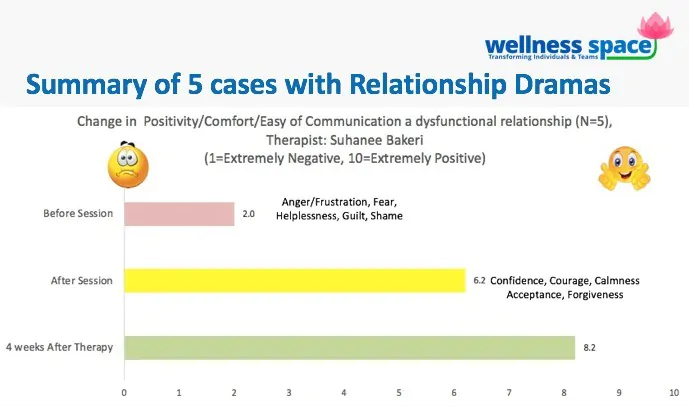
When people come with relationship issues we do a technique that helps them resolve the blockage in the relationship and change their response to that person (living/dead). Usually people whose relationships are not functional always feel that it is so because the other person is not willing to change. They also believe that it cant get better till the other person doesn't change his/her behaviour or attitude. This is a myth. IN all relationships we all suffer from our own perceptual distortions of that person based on our past experiences with that person and we always unconsciously behave or respond

RELATIONSHIP DRAMAS…..2026-08-25T12:16:42+05:30
Go to Top