About thewellness

This author has not yet filled in any details.
So far thewellness has created 295 blog entries.

International Conference on applying Psychology for Suicide Prevention-Our Abstracts

Wellness Space team is going to present total of 3 abstracts (please see below) at the conference.  Please join us. Abstract #1 -Effective Strategies for Suicide Risk Assessment and Intervention: A Practical Guide Utilizing the ASQ Tool for Screening Background: Suicide behaviour (including suicide thoughts, plans, and history of attempts) requires specialised screening and intervention. Suicide is a primary cause of death in the young population of India (Age <39), and hence, psychologists and psychotherapists need a framework to facilitate better screening and recovery. Objective: The study, based on the ASQ (Ask Suicide Screening Questions) toolkit, provides

International Conference on applying Psychology for Suicide Prevention-Our Abstracts2025-05-21T15:23:00+05:30

Pareto (80-20 rule) #1: Small Changes, Big Impact: Integrating the Pareto Principle into Your Daily Routine

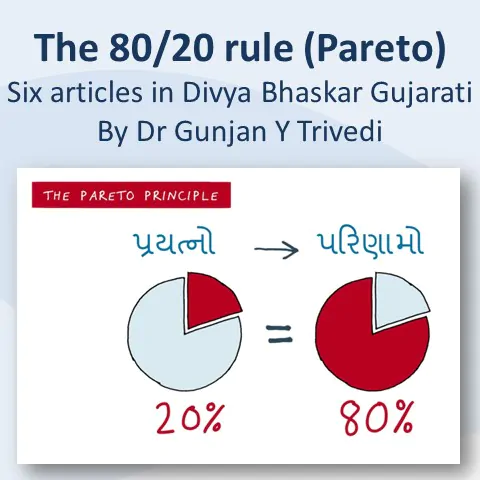
This was an article given to Divya Bhaskar, Ahmedabad (Feb 19, 2022) Context: We use Pareto ideas across our daily work, even in mental health.  For example, index trauma (covered in Module 6) is based on the 80/20 principle.  Other examples in daily life include equity portfolio planning and financial well-being. Please read the entire article below in English: The Pareto Principle, also known as the 80/20 rule, suggests that a significant portion, often around 80%, of effects come from a relatively small portion, usually around 20%, of causes. In simpler terms, focusing on a few key areas can often

Pareto (80-20 rule) #1: Small Changes, Big Impact: Integrating the Pareto Principle into Your Daily Routine2024-03-25T12:17:23+05:30

NAOP24-Presentation on “resilience & depression”, “childhood trauma & suicide behavior”

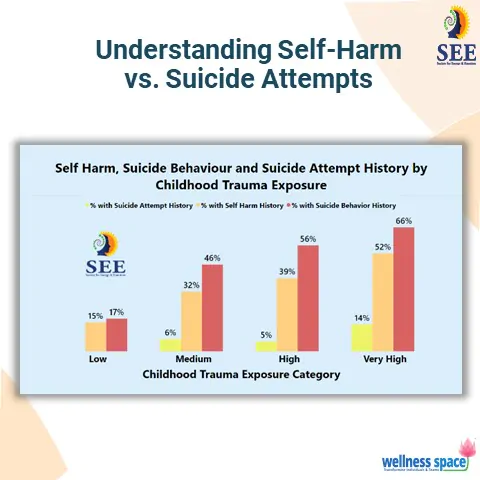
The following two abstracts will be presented (The Role of Resilience in moderating depression, Childhood Trauma & suicide behaviour) at the NAOP national convention in Vishakhapatnam on Feb. 15, 2024).   Abstract ID NAOPABST000312: The pivotal role of resilience and perceived social support in moderating depression: A structural equation modelling approach Presenter: Dr Gunjan Y Trivedi Co-Presenter: Neha Pandya, Parishi Thakore, Dr Hemalatha Ramani Background: Resilience is the capacity to adjust, recover from hardship, stress, or challenging life experiences, and move on and prosper. It entails using sensible coping strategies, preserving well-being, and even becoming more resilient in facing difficulties.

NAOP24-Presentation on “resilience & depression”, “childhood trauma & suicide behavior”2024-02-08T10:47:05+05:30

Effect of lifestyle choices on Cerebrospinal Fluid (CSF) pulsations Journal of Applied Consciousness Studies

Abstract: CSF flow plays a critical role in clearing metabolic waste from the brain. The flow depends on several factors, including cardiac and respiratory oscillations. The process of CSF pulsations also follows a circadian pattern and plays a central role in maintaining the homeostasis of the Brain and the Central Nervous System (CNS). Any disruption to this flow triggers a homeostatic imbalance in the central nervous system and could increase the risk of several chronic conditions, including Alzheimer’s. This commentary highlights recent research to articulate the importance of CSF flow and provides insights into the drivers of the CSF flow.

Effect of lifestyle choices on Cerebrospinal Fluid (CSF) pulsations Journal of Applied Consciousness Studies2025-05-21T13:01:47+05:30

Childhood trauma research in India at Wellness Space (Update: Jun ’25)

Childhood trauma research, coaching and training at Wellness Space, Ahmedabad, India At Wellness Space, over the past several years, we have worked on understanding the root causes that lead to internalizing and externalizing symptoms.  One of the core issues or root causes is exposure to repeated trauma of high intensity during childhood.  Despite the extensive global evidence, there is limited childhood trauma research in India.  Hence, we decided to pursue it.  At the moment, we have extensive published evidence supporting the role of childhood trauma as a significant risk factor in several internalizing issues (Such as depression and anxiety, insomnia,

Childhood trauma research in India at Wellness Space (Update: Jun ’25)2026-05-01T16:18:21+05:30
Go to Top