PsyComplexity Scale™-Tool to understand “What happened to me?”

PsyComplexity Scale™-Tool to understand "What happened to me?" Your experience doesn’t fit a single diagnosis — because it isn’t supposed to.’ The PsyComplexity Scale™ is a structured classification system used at Wellness Space to triage psychotherapy clients before treatment begins, as detailed in our book "What Happened to Me? vs What's Wrong with Me?: Indian Perspectives on Childhood Trauma and Recovery". It integrates four observable parameters — trauma exposure, suicidality, symptom severity, and behavioural challenges — into a single graded score that guides three early decisions: who needs to be seen first, by which therapist, and with what kind of

PsyComplexity Scale™-Tool to understand “What happened to me?”2026-05-23T13:30:24+05:30

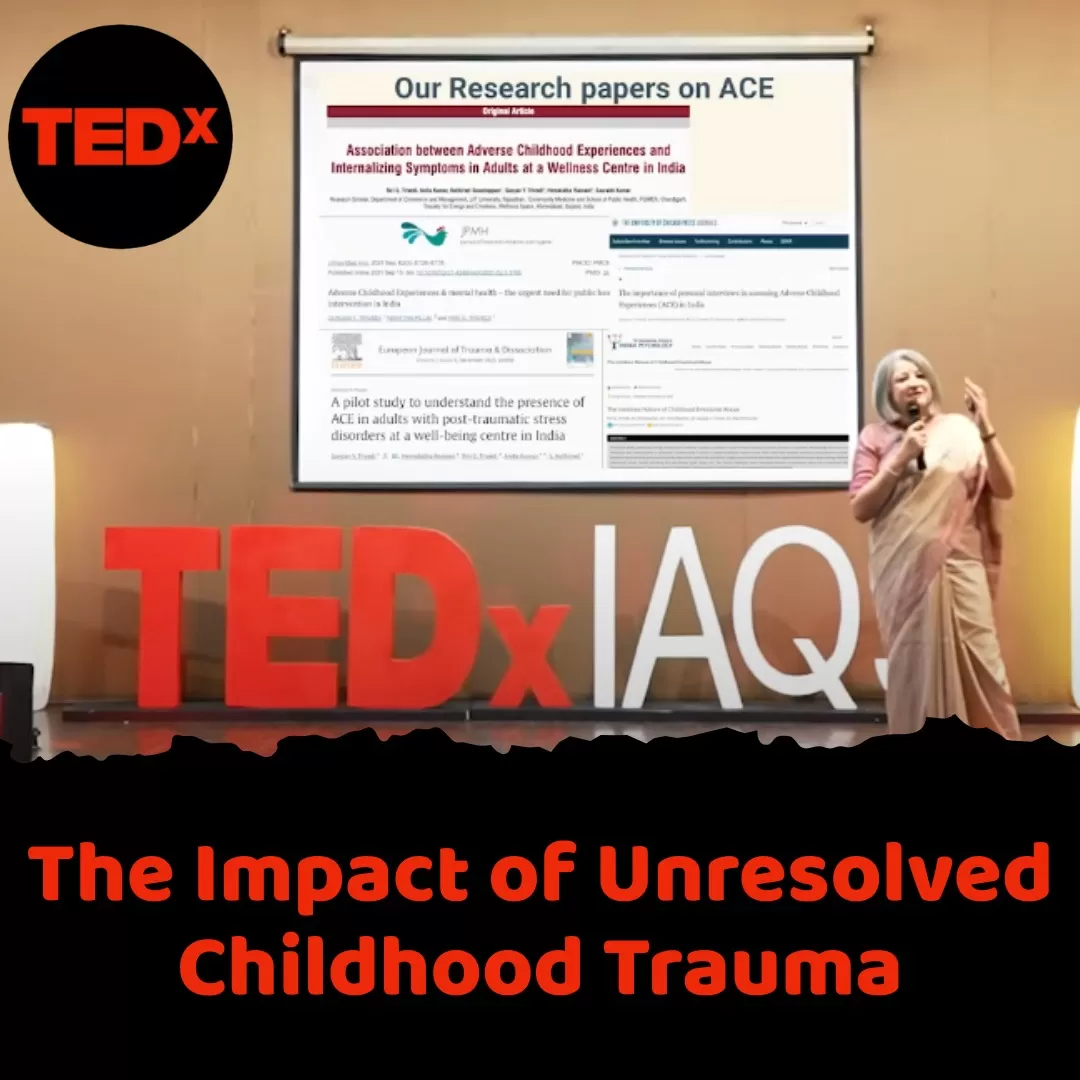
The Impact of Unresolved – Childhood Trauma (India) – Ted Talk

The Impact of Unresolved Childhood Trauma | Riri G. Trivedi | TEDxIAQS https://www.youtube.com/watch?v=TenK8BThm_4 Riri G. Trivedi shares a powerful Talk on the impact of unresolved childhood trauma, known as Adverse Childhood Experiences (ACEs), and how it can deeply affect our mental health and parenting styles as adults. Drawing from real-life stories, she explains how even highly successful individuals can struggle with emotional triggers from their past. Riri highlights the neurological effects of trauma, showing how it disrupts our ability to stay calm and respond positively. She emphasizes the importance of self-regulation techniques, like EFT tapping and therapy, to help parents

The Impact of Unresolved – Childhood Trauma (India) – Ted Talk2026-05-01T16:26:40+05:30

Call for action – what can mental health practitioners do to understand and manage the risk of suicide behaviour?

Call for action - what can mental health practitioners do to understand and manage the risk of suicide behaviour? By Gunjan Y Trivedi, PhD (Co-founder, Society for Energy & Emotions, Wellness Space, [email protected]) Note: This article was published in the magazine "Just let go" - by Clover Leave Academy (2024) Introduction: India, 18% of the world population, accounts for 28% of the global suicide numbers. Evidence indicates that 90% of the individuals who attempt suicide have a history of mental health issues.  Unfortunately, with >250 million young adolescents, suicide is the primary cause of death among young Indians (Age 15-39).

Call for action – what can mental health practitioners do to understand and manage the risk of suicide behaviour?2026-05-01T16:36:19+05:30

Evidence on Adverse Childhood Experiences, dissociative disorders, and attachment

This article provides a brief overview on the outcomes of ACEs (Adverse Childhood Experiences) with respect to dissociative symptoms and attachment disorders. Background:  Adverse Childhood Experiences, extreme stress, and dissociative symptoms There is considerable evidence regarding the relationship between childhood abuse or neglect and dissociation symptoms in adulthood with an earlier age of onset, as well as a longer duration of abuse and parental abuse significantly predicted higher dissociation scores. The relationship between ACEs and dissociation is fully mediated by mentalization; this means that the important predictive factor for dissociation is not if you have been abused as a child,

Evidence on Adverse Childhood Experiences, dissociative disorders, and attachment2026-04-30T18:05:08+05:30

Tribhanga movie and inner child or adverse childhood experiences – a perspective

  Tribhanga- The movie I need to include in my compulsory pre-watch videos before I start my Healing the Child Within Training. It is a beautiful and quite comprehensive representative of so many of the Inner child concepts and theories that we teach in the training and each character represents the many clients we have worked with, over the years. I cried buckets while watching it and I know many of you out there would, too! Nayan, Anu and Masha (3 generations of women) represent the maximum no of clients who come to us for therapy - be it mother

Tribhanga movie and inner child or adverse childhood experiences – a perspective2026-04-30T18:17:40+05:30
Go to Top