This category captures the publications (Scientific and evidence based) developed by Society for Energy & Emotions (SEE) or by cofounders of SEE & Wellness Space

Call for action – what can mental health practitioners do to understand and manage the risk of suicide behaviour?

Call for action - what can mental health practitioners do to understand and manage the risk of suicide behaviour? By Gunjan Y Trivedi, PhD (Co-founder, Society for Energy & Emotions, Wellness Space, [email protected]) Note: This article was published in the magazine "Just let go" - by Clover Leave Academy (2024) Introduction: India, 18% of the world population, accounts for 28% of the global suicide numbers. Evidence indicates that 90% of the individuals who attempt suicide have a history of mental health issues.  Unfortunately, with >250 million young adolescents, suicide is the primary cause of death among young Indians (Age 15-39).

Call for action – what can mental health practitioners do to understand and manage the risk of suicide behaviour?2026-05-01T16:36:19+05:30

Publication – How the parents’ childhood trauma influences Parenting Style

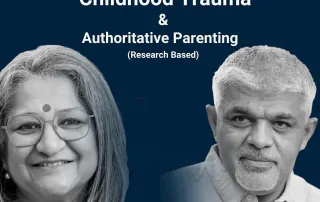
How the parents' childhood trauma influences Parenting Style Vipasha Naik, Dr Gunjan Trivedi,  Riri G Trivedi (Society for Energy & Emotions, Wellness Space, Ahmedabad, India) Publication - Navigating Generational Patterns: How Childhood Trauma Shapes Authoritative Parenting Practices in Indian Families ABSTRACT Background: Adverse Childhood Experiences (ACEs) are defined as early childhood exposure to maltreatment and household dysfunction. Research indicates a potential intergenerational influence of parental ACEs on their children’s well-being. Objective: This study investigated the association between parental ACE scores and the authoritative parenting style, which was considered the ideal style among the four parenting styles. Methods: Parents (N=130 ) seeking therapeutic help at a wellness center

Publication – How the parents’ childhood trauma influences Parenting Style2024-08-16T16:12:20+05:30

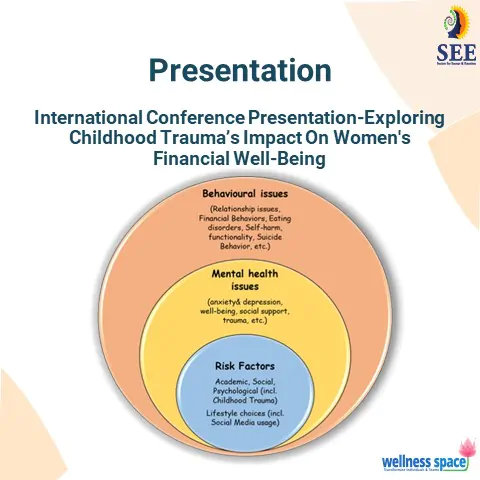
International Conference Presentation-Exploring Childhood Trauma’s Impact On Women’s Financial Well-Being

The following work done by the team at the Society for Energy & Emotions and Osat Knowledge Pvt Ltd was presented at the Annual International Conference on Harmony on Innovation at the DY Patil B-School, Pune. The work supports the model highlighted below that we use in our daily work - about the role of childhood trauma on long-term behavioural issues, that was explicitly studied among the women. Please see the press coverage HERE. Exploring Childhood Trauma’s Impact On Women's Financial Well-Being Author Details: *Ruhi Pabari1, Gunjan Y Trivedi2, Amit Trivedi3 1, 2 Society for Energy & Emotions, Wellness

International Conference Presentation-Exploring Childhood Trauma’s Impact On Women’s Financial Well-Being2025-05-21T15:04:43+05:30

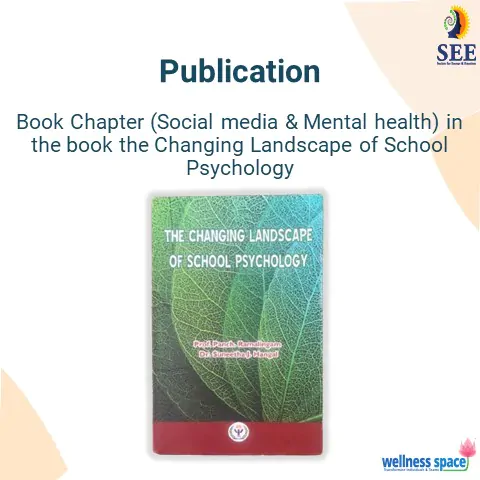
Book Chapter (Social media & Mental health) in the book the Changing Landscape of School Psychology

Book Chapter (Social media & Mental health) in the book the Changing Landscape of School Psychology We are pleased to share that one of our studies on the impact of social media usage on mental health is now included in the recently published book (See the details below) Summary of the findings: The results indicated that higher usage of social media resulted in a negative impact on mental health parameters. The high (4-6 hours) to very high usage categories (>6 hours) had higher odds of poor mental health outcomes compared to low usage (<2 hours). Young individuals (Aged <=18-25) are

Book Chapter (Social media & Mental health) in the book the Changing Landscape of School Psychology2025-05-21T15:03:24+05:30

International Conference on applying Psychology for Suicide Prevention-Our Abstracts

Wellness Space team is going to present total of 3 abstracts (please see below) at the conference.  Please join us. Abstract #1 -Effective Strategies for Suicide Risk Assessment and Intervention: A Practical Guide Utilizing the ASQ Tool for Screening Background: Suicide behaviour (including suicide thoughts, plans, and history of attempts) requires specialised screening and intervention. Suicide is a primary cause of death in the young population of India (Age <39), and hence, psychologists and psychotherapists need a framework to facilitate better screening and recovery. Objective: The study, based on the ASQ (Ask Suicide Screening Questions) toolkit, provides

International Conference on applying Psychology for Suicide Prevention-Our Abstracts2025-05-21T15:23:00+05:30
Go to Top