PTSD & CPTSD Research in India: Clinical Insights from Wellness Space

Written by Dr Gunjan Y. Trivedi, PhD, co-founder. First published: December 2024.

Since 2019, Wellness Space in Ahmedabad has studied childhood trauma, Post-Traumatic Stress Disorder (PTSD) and Complex PTSD (CPTSD) in Indian adults. We began by measuring adverse childhood experiences (ACEs) in adults with PTSD. The PTSD checklist we used (PCL-C) measures PTSD symptoms only, so it could not capture the extra difficulties seen in CPTSD.  While this was a very good start, it was not sufficient to capture the nuances observed in CPTSD.  Given that up to 50% of individuals visiting mental health centers could have CPTSD, we had to find ways to understand these nuances, and the research led us to the International Trauma Questionnaire (ITQ), which is based on ICD-11 and covers both PTSD and CPTSD. (Reference)

Our Indian studies, all from one urban centre, cover ACEs, PTSD, CPTSD, Reconsolidation of Traumatic Memories (RTM) and trauma-informed therapy; they have helped many clients, and hence this write-up shares these insights broadly. 

This page lists each study, what it found and what it cannot tell us.

PTSD vs CPTSD

In ICD-11, PTSD has three parts: re-experiencing, avoidance and a sense of current threat. CPTSD has those three plus Disturbances in Self-Organization (DSO): difficulty managing emotions, a negative view of yourself, and difficulty in relationships. The ITQ measures each of these with two items per symptom group. DSM-5 does not formally list CPTSD as its own diagnosis.
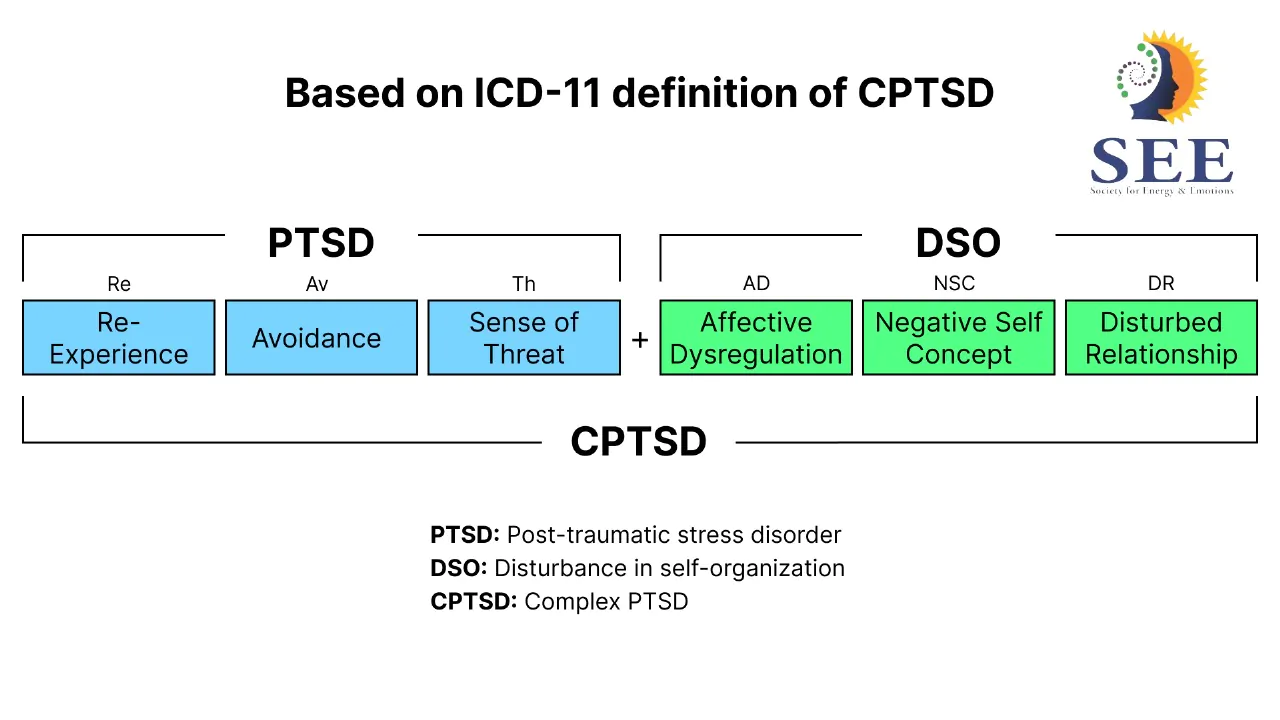
Functional impairment or Disturbance in Self Organization (CPTSD)

PTSD vs Complex PTSD Explained: How Repeated Trauma Changes Us

This video explains the difference between PTSD and Complex PTSD (CPTSD), and how prolonged or repeated trauma can affect emotional regulation, self-worth, relationships and the nervous system. It also looks at how childhood experiences such as emotional neglect, abuse, humiliation, bullying and domestic violence can shape long-term survival responses, which may later show up as anxiety, depression, anger, insomnia or relationship difficulties.

Our Published Indian Studies

Our team at Wellness Space, Ahmedabad, has published research on childhood trauma, PTSD and complex PTSD (CPTSD) in Indian adults. Three key studies are summarised below, followed by three single-case reports. The table at the end brings them all together.

Key studies

#1. Presence of ACEs in Adults with PTSD

Our first Indian study looked at adverse childhood experiences (ACEs) in 60 adults with high PTSD symptom scores at a well-being centre in Gujarat. An experienced therapist or psychologist assessed each adult for PTSD using the PCL-C and reviewed their childhood experiences between ages 3 and 18 through interviews. Emotional abuse, physical abuse, emotional neglect and a difficult home environment were each present in more than half of participants, and these experiences often occurred together. This work led us to ask whether standard PTSD measures were missing something, which is where CPTSD comes in.

#2. RTM for Complex PTSD in India

In this pilot quasi-experimental study, 107 adults with CPTSD, assessed with the International Trauma Questionnaire (ITQ), received Reconsolidation of Traumatic Memories (RTM). Of the 82 who completed five sessions or about one month, 80 no longer met criteria for PTSD or CPTSD. All 30 people assessed again at three months had no diagnosis. This was a pilot study with no control group, in an urban, English-speaking sample, so it cannot show that RTM works better than other therapies.

Read the full study → https://doi.org/10.1016/j.ejtd.2024.100480

#3. Childhood emotional maltreatment, loneliness, depression and complex trauma symptoms

At Wellness Space, we studied 465 adults who had lived through trauma. We wanted to know whether being emotionally abused or neglected as a child was linked to loneliness, depression and the self-related problems seen in Complex PTSD. These problems include trouble managing emotions, a poor self-image and difficult relationships. We found that adults who faced emotional abuse or neglect as children felt lonelier and had more of these Complex PTSD problems. Loneliness was also linked to depression. We now hope to run larger, long-term studies to learn more.

Read the full study → https://doi.org/10.1007/s42448-025-00249-9

Case reports

Alongside these studies, we have published detailed single-case reports showing how assessment and therapy work for individual clients.

Case 1: RTM for Complex PTSD (Cureus, 2024)

This adult’s childhood included frequent physical abuse, especially from teachers, occasional emotional neglect, and mental health issues and a suicide in the joint family. After an initial consultation, they had eight sessions of RTM on their worst trauma memories, along with reframing and self-regulation techniques. The report suggests RTM may help people whose symptoms stem from long-term childhood trauma.
Read the case → https://doi.org/10.7759/cureus.68927

Case 2: PTSD After Losing a Son (Cureus, 2025)

A man in his early 50s lost his role in the family business and then, unexpectedly, his son in his 20s. He developed severe depression, insomnia, ongoing grief and flashbacks. RTM and inner child therapy targeted his PTSD symptoms, and he no longer met PTSD criteria one month into therapy. Over six months, his depression, anxiety and sleep improved; his psychiatrist phased out his medication, and he went on to start a new business.
Read the case → https://doi.org/10.7759/cureus.80595

Case 3: Complex PTSD in a Young Woman (Cureus, 2026)

A woman in her early 20s had an ACE score of 8, reflecting very high exposure to childhood trauma, and met criteria for CPTSD. Over 30 sessions across about a year, she received an integrative approach of inner child work, parts work, Gestalt techniques and self-regulation practices, rather than RTM as the main method. By the end, she no longer met criteria for any trauma diagnosis, and her self-harm urges had stopped.
Read the case → https://doi.org/10.7759/cureus.105984

Some of our published work is highlighted below:

Research article / Case study

Design and sample

What it reported

ACEs in adults with PTSD

Indian pilot study of 60 adults with high PTSD symptom scores (PCL-C ≥44) at a well-being centre in Gujarat; ACEs from ages 3 to 18 reviewed by interview

Seven ACEs affected over half of participants, including emotional abuse, physical abuse, emotional neglect, domestic violence, family mental illness, peer rejection and parental fighting. They clustered into interpersonal and home-environment groups and often co-occurred. Descriptive study, no comparison group.

RTM for CPTSD

Pilot quasi-experimental Indian study of 107 adults assessed with the ITQ; ethics approved and trial-registered (CTRI/2022/11/047019)

Of 107 adults with CPTSD, 82 completed one month of treatment (19 of the 25 dropouts left before any RTM session). Of those 82, 80 no longer met PTSD or CPTSD criteria, and average ITQ scores fell from 33.4 to 12.4, with depression and anxiety also dropping. All 30 followed up at three months had no diagnosis. Limits: no control group, an urban English-speaking sample, and 52 improvers were not followed up.

Childhood Emotional Maltreatment, loneliness, depression and complex trauma symptoms

we studied 465 adults who had lived through trauma. We wanted to know whether being emotionally abused or neglected as a child was linked to loneliness, depression and the self-related problems seen in Complex PTSD.

We found that adults who faced emotional abuse or neglect as children felt lonelier and had more of these Complex PTSD problems. Loneliness was also linked to depression. We now hope to run larger, long-term studies

Case #1: RTM for complex PTSD

Single case study; adult with complex PTSD from childhood abuse and neglect; 8 sessions of RTM, reframing and self-regulation

The author reports benefit for symptoms linked to long-term childhood trauma

Case #2: CPTSD, Prolonged Grief, and adjustment disorder

Single case study; man in his early 50s with PTSD and prolonged grief; RTM and inner child therapy over about 6 months

No PTSD diagnosis after 1 month; depression, anxiety and sleep improved; medication phased out

Case #3: Complex PTSD in a young woman

Single case study; woman in her early 20s with an ACE score of 8; 30 sessions over about a year, mainly inner child, parts and Gestalt work (not mainly RTM)

No trauma diagnosis by the end; self-harm urges stopped

Limitations

All studies come from one urban, English-speaking centre in Ahmedabad, and the authors deliver the therapy discussed. Pilot studies and case reports cannot show that a treatment works better than others. Larger, controlled studies are needed.

Our wider childhood trauma research, including studies on ACE assessment, depression and anxiety, and resilience, is on our childhood trauma research page.

What Our PTSD and CPTSD Work Has Taught Us

These observations come from our work at one centre. They are based on pilot studies and case reports, so they are starting points for further research, not firm conclusions.

Childhood trauma is common in adults who seek help for trauma symptoms

In our 2023 study of 60 adults with high PTSD symptom scores, seven types of adverse childhood experience were each present in more than half of them. In our RTM study of 107 adults with CPTSD, the average person reported about 7 of the 16 ACE categories we assess. Emotional neglect (92.5%), emotional abuse (89.7%) and physical abuse (86%) were the most common.

PTSD measures alone can miss part of the picture

Our early work used the PCL-C, which measures PTSD symptoms only. Many of the adults we saw also struggled with managing emotions, how they saw themselves and their relationships, which the PCL-C does not assess. This is why we moved to the ITQ, which assesses both PTSD and CPTSD.

CPTSD means looking beyond PTSD symptoms

Disturbances in Self-Organization (DSO) are what separate CPTSD from PTSD. In our study of 465 adults, childhood emotional maltreatment was linked to both DSO and loneliness. This suggests that emotional abuse and neglect in childhood deserve careful attention during assessment.

Standardised measures help track change

In our RTM study we measured trauma symptoms (ITQ), depression (Major Depression Inventory) and anxiety (GAD-7) before therapy, at about one month and at three months. Trauma scores fell quickly. Depression scores fell more slowly: at one month the average was still above the study’s acceptable level, and in the 30 people followed to three months it fell further. Measuring more than one outcome gives a fuller picture of recovery than trauma scores alone.

Therapy needs to consider the entire trauma history

Our case reports show that trauma rarely comes alone. One man in his early 50s had signs of PTSD, prolonged grief and adjustment disorder after losing his son and his role in the family business. Another case showed how trauma-informed psychotherapy was applied for a young woman with CPTSD. Single cases show how assessment and therapy were carried out, not what works in general.

For Clinicians and Mental Health Professionals

Our published work may be useful to psychologists, psychiatrists, counsellors and researchers working with PTSD, Complex PTSD, childhood trauma and ICD-11 assessment in Indian populations. Each paper is linked in the table above. You can also read about our CPTSD work for survivors and clinicians, our RTM work in India, and our training in evidence-based psychotherapy.


PTSD and CPTSD: Frequently Asked Questions

These answers explain the ICD-11 framework and summarise our Indian studies. They are not a diagnosis. Please see a qualified mental health professional for an assessment.

Understanding PTSD and CPTSD

What is the difference between PTSD and CPTSD?

In ICD-11, both include three PTSD symptom groups: re-experiencing the trauma (flashbacks, nightmares, vivid intrusive memories), avoiding reminders, and a lasting sense of current threat. CPTSD adds a second layer called Disturbances in Self-Organization (DSO): difficulty regulating emotions, a persistently negative view of yourself, and difficulty in relationships. Put simply, PTSD is about the trauma still feeling present. CPTSD is that, plus changes in how a person relates to their emotions, themselves and other people.

Does single-event or repeated trauma decide whether it is PTSD or CPTSD?

It is an important clue, but not the deciding rule. PTSD is often linked to a single frightening event, such as an accident, a natural disaster or an assault. CPTSD is most often linked to prolonged or repeated trauma that was hard or impossible to escape, such as ongoing childhood abuse or neglect, or long-term domestic violence. The ICD-11 description covers an event or a series of events, and says CPTSD most commonly follows prolonged or repetitive ones. So a single event does not rule CPTSD out, and repeated trauma can also lead to PTSD without DSO. The diagnosis depends on the symptom pattern: PTSD symptoms alone, or PTSD symptoms plus DSO. In our Indian DSO study, childhood emotional abuse and neglect were linked to DSO. These experiences tend to be repeated, but that study did not compare single and repeated events directly.

What is Disturbances in Self-Organization (DSO)?

DSO has three parts: affective dysregulation, negative self-concept and disturbed relationships. In everyday terms, that means emotions that feel overwhelming or numb, a lasting sense of worthlessness or defeat (often with shame or guilt), and trouble feeling close to people or staying connected. DSO is what separates CPTSD from PTSD in ICD-11. Our Indian DSO study looked at these symptoms in 465 adults.

Signs, assessment and diagnosis

What are the signs of CPTSD in adults?

Signs fall into two groups. PTSD symptoms include intrusive memories, flashbacks or nightmares, avoiding thoughts, places or people linked to the trauma, and feeling constantly on guard or easily startled. DSO symptoms include intense or numbed emotions, feeling worthless, ashamed or defeated, and finding closeness with others difficult. Many people have some of these signs without having CPTSD, and depression, anxiety and other conditions can look similar. Our RTM study also measured depression and anxiety alongside CPTSD. Only a qualified clinician can tell these apart.

How is CPTSD assessed?

We use the International Trauma Questionnaire (ITQ), a short self-report tool based on ICD-11. It has six items for PTSD symptoms and six for DSO, two for each symptom group, plus questions on how much these symptoms affect daily functioning. Results place a person as having no diagnosis of PTSD or CPTSD. In our RTM study, two trained therapists, including a psychologist, carried out the assessments. A questionnaire alone is not a diagnosis.

Is CPTSD an official diagnosis?

Complex Post-Traumatic Stress Disorder (CPTSD) is an official diagnosis in the World Health Organization’s International Classification of Diseases (ICD-11), but it is not officially recognised in the American Psychiatric Association’s Diagnostic and Statistical Manual of Mental Disorders (DSM-5). 

6 Signs of Complex PTSD in Adults

This video describes six common signs of CPTSD: difficulty regulating emotions, persistent shame or a negative self-image, difficulty with relationships and trust, feeling constantly unsafe or on alert, emotional flashbacks and trauma triggers, and feeling disconnected from yourself or others. It explains that these patterns can develop after prolonged or repeated trauma, especially when a person feels trapped or powerless.

Research and treatment

Has CPTSD been studied in India?

Yes, but the evidence is limited. When our RTM pilot was published, its authors noted very few Indian PTSD studies, and none on CPTSD or on RTM. Other groups have since used the ITQ too.  Our studies come from one urban centre with English-speaking samples, so they cannot tell us how common CPTSD is across India.

Can CPTSD be treated?

The authors of our RTM study noted that studies on how to address CPTSD are limited, so research is still developing. Different approaches suit different people, and the studies on this page are pilots and case reports, so they cannot show that any one approach is best. If you are considering therapy, ask a qualified mental health professional about the options, including their evidence and limits.

What is RTM, and has it been studied for CPTSD?

Reconsolidation of Traumatic Memories (RTM) is a brief protocol based on memory reconsolidation, the idea that a reactivated memory can be updated before it is stored again. It uses a structured, dissociated recall protocol, so clients do not need to narrate the trauma or feel it again. In our pilot study of 107 adults with CPTSD, 82 completed five sessions or about a month. Of these, 80 no longer met criteria for PTSD or CPTSD, and their average CPTSD, depression and anxiety scores fell significantly. The limitations are listed at the end of the table. Outside India, a feasibility trial in military veterans compared RTM with trauma-focused CBT, and its authors concluded the protocol was fit for a full efficacy trial (See #2 for details in the table).

What has Wellness Space published on PTSD and CPTSD?

We have published six papers: a pilot study of ACEs in adults with PTSD (2023), a pilot study of RTM for CPTSD (2024), a study of DSO and childhood emotional maltreatment (2025), and three case reports (2024 to 2026). The table above gives the design, sample and a link for each. For our wider childhood trauma work, see our childhood trauma research page.

How to Heal From Childhood Trauma or Complex PTSD

This video introduces our Pancha Kosha Trauma Framework™, which describes childhood trauma and recovery across five connected layers: body, breath and energy, emotions, thoughts, and inner peace or authenticity. It presents healing as an integrated mind–body process rather than a focus on psychological symptoms alone. The framework is a clinical approach and has not yet been tested in a peer-reviewed study.